
- Back
- Back
- Back
- Back
- Back
- Back
- Back
- Back
- Back
- Back

A recent House of Lords debate on the English Devolution and Community Empowerment Bill has highlighted long-standing challenges in wheelchair and community equipment provision — and how a proposed amendment could help address them.
Amendment 165A to Clause 44 of the Bill, tabled by Lord Hunt of Kings Heath, would add the following to the list of “general health determinants” that authorities must consider when addressing health inequalities:
“(f) the degree of ease or difficulty with which persons have access to high quality wheelchair and community equipment provision.”
This amendment would include wheelchair and community equipment provision in the list of ‘general health determinants’ that authorities need to have regard to as a cause of health inequality.
Peers from across the House voiced support for the amendment, describing the current state of wheelchair and community equipment provision as fragmented, inconsistent, and underfunded.
Watch the debate from 19:56:28 via this link: https://parliamentlive.tv/event/index/dacc4873-aaf6-4230-83a1-46ad665ad36b?in=19:56:28
Lord Hunt of Kings Heath called the current system “a disgrace,” citing evidence from the Wheelchair Alliance and the All-Party Parliamentary Group for Access to Disability Equipment showing the lack of national standards, independent regulation, and clear repair or complaints processes. “Many disabled people face long waiting times, delays in hospital discharge, loss of independence, social isolation and avoidable deterioration in health and well-being,” he said.
He explained that wheelchair and community equipment services, though often reaching the same individuals, are managed separately — one primarily by the NHS, the other by local authorities and integrated care boards. This division, he argued, leads to inefficiency and poor outcomes. “They should operate in tandem, but they are two distinct systems,” he said, urging closer collaboration.
Lord Shinkwin, speaking as a wheelchair user, said the amendment “puts the issue on the radar,” adding that access to wheelchair and community equipment services “is a health inequality issue.” He warned that the system’s fragmentation and lack of accountability have allowed inequality to become normalised. “Fragmentation may make for better ICB balance sheets in the short term, but history shows that, in the medium term, it is a very costly false economy.”
Baroness Griffin of Princethorpe added that one in three disabled people are still waiting for approved equipment, and that 74 percent of delayed hospital discharges are linked to equipment delays. The amendment, she said, would help make this area of provision a recognised factor in tackling health inequalities.
Responding for the UK Government, Baroness Taylor of Stevenage acknowledged the concerns but said existing legislation already requires provision of such services. In her response in the House of Lords, she said:
“Local authorities in England already have a statutory duty under various legislation, including the Care Act 2014 and the Children and Families Act 2014, to make arrangements for the provision of disability aids and community equipment to meet the assessed eligible needs of individuals who are resident in their area. In terms of delivery, NHS England supports integrated care boards and wheelchair providers to reduce regional variation in the quality and provision of NHS wheelchairs and to reduce delays in people receiving timely intervention and wheelchair equipment.”
She added that she would raise the issues with colleagues in DHSC and MHCLG and confirmed that the Bill’s existing scope already allows for access to equipment to be considered under “general health determinants.”
Watch Baroness Taylor’s response to Amendment 165A from 16:06:27 via this link: https://parliamentlive.tv/event/index/49b1e807-8829-4a75-a307-4a738052e65b?in=16:06:27
If accepted, Amendment 165A would:
The amendment remains under consideration as the Bill progresses through the House of Lords. Its debate marks an important acknowledgment of the essential role that wheelchairs and community equipment play in tackling health inequalities. The BHTA will update members if the amendment is accepted into the Bill.

The House of Lords recently held a debate examining the UK Government’s plans to publish a strategy for wheelchair provision through NHS and social care services. The question was raised by Lord Hunt of Kings Heath, who opened the discussion by highlighting long-standing systemic issues within wheelchair and community equipment provision.
Responding on behalf of the government, Baroness Merron acknowledged the concerns raised across the debate. She confirmed, however, that the government has no plans to publish a national strategy for wheelchair provision, a point that drew disappointment from many peers.
The debate explored wide-ranging issues including service fragmentation, delays in assessments and repairs, unsuitable equipment, lack of national oversight, supply chain vulnerabilities, and the human impact on independence and dignity.
Watch the debate here. Begins at 12:53:10.
Peers highlighted significant inconsistencies in wheelchair and community equipment provision across England. Lord Hunt observed that services are “inconsistent and under-resourced,” noting that each local authority and integrated care board (ICB) operates differently, resulting in a postcode lottery.
Lord Kamall outlined stark disparities in eligibility criteria between regions. For example:
Lord Kamall said: “A delay in receiving a wheelchair is not simply an inconvenience or statistic, it is a barrier to living a fuller life.”
These differences affect who qualifies for a wheelchair, the type of equipment provided, and the level of support available. NHS England’s dataset shows significant regional variation in meeting the 18-week waiting-time standard. Data provided by the British Healthcare Trades Association (BHTA) was also cited in the debate, showing that only around 80 percent of users receive a wheelchair or modification within 18 weeks—below the national 92 percent target—with even longer waits for people with complex needs. in meeting the 18‑week waiting-time standard.
Peers also drew on detailed evidence from national reports. The Wheelchair Alliance report highlighted inconsistent provision, long delays in assessment, unsafe temporary equipment use, and a lack of clear repair pathways. It showed how inadequate provision undermines independence, contributes to deterioration in physical and mental health, and delays discharge.
The APPG for Disability Equipment report about community equipment services described the system as inconsistent, underinvested, fragmented and lacking leadership. It identified staff shortages, supply chain weaknesses, recycling delays, dependency on single contracted providers, and widespread dissatisfaction among users and carers with current provision.
Peers shared examples illustrating the impact of delays and bureaucratic barriers. Lord Harries recounted the case of Rhys Porter, a young man with cerebral palsy who went two years without essential equipment, leaving his family to manage unsafe manual handling that put them all at risk.
Peers described consequences including loss of independence, avoidable deterioration in health, delayed hospital discharge, social isolation, and increased pressure on carers.
The Wheelchair Alliance report further documented how inadequate equipment provision leads to preventable complications and unnecessary healthcare use.
Several peers, including Baroness Lane‑Fox, highlighted how wheelchair and equipment provision affects employment. She argued that these services form part of the national employment infrastructure because many disabled people cannot access or sustain work without the right equipment.
Baroness Lane-Fox stated: “We often file wheelchair and CES services under health and social care; in reality, they ought to be part of our national employment infrastructure. When services fail, people don’t just lose their mobility, they lose their ability to contribute.”
Delays and unsuitable equipment prevent people from accepting job offers, participating in education, or contributing to the workforce.
Lord Rennard expanded on this point, stating: “Fundamentally, what we need to address is balancing the costs of the provision of wheelchairs and community equipment with long‑term benefits including preventing accidents, reducing the need for health care intervention in future, enabling people with disabilities to work, pay taxes, and reduce their dependency on benefits, whilst at the same time significantly increasing emotional wellbeing for many families.”
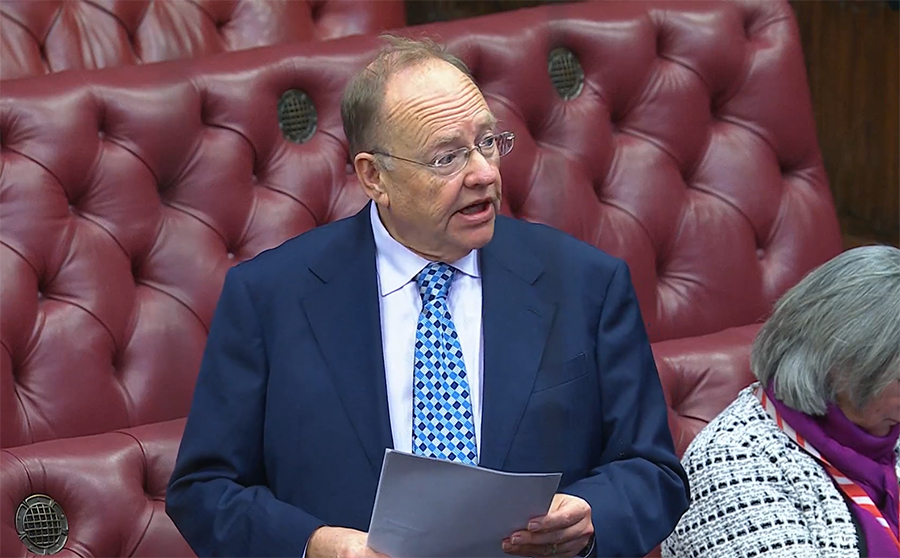
Concerns were raised about outdated or unsuitable NHS‑provided wheelchairs. Several peers noted that many commonly issued models remain heavy, steel‑framed, and difficult to transport, contrasting them with modern lightweight designs.
Assessments were criticised for failing to consider lifestyle, employment, and daily activity needs; in some cases, users were forced to purchase their own equipment. Baroness Brinton recounted her own experience of being deemed ineligible for an electric chair despite clinical advice, ultimately having to privately fund her own wheelchair.
Baroness Brinton and Lord Rennard highlighted structural weaknesses in commissioning and procurement. The APPG for Disability Equipment recommended more strategic commissioning practices, better alignment between local authorities and ICBs, and improved oversight to ensure service continuity and quality.
The APPG report identified additional challenges:
These issues undermine quality, consistency, and long‑term service sustainability, with direct implications for both users and providers.
Across the House, peers argued for a national strategy to address variation, modernise equipment provision, improve commissioning, and introduce clearer accountability. Suggestions included national leadership and oversight, standardised eligibility and quality criteria, a shift from lowest‑cost procurement to value‑based procurement, and long‑term investment to support modernisation and prevent system fragility.
Lord Hunt argued that many issues could be resolved with national coordination, while Lord Shinkwin and others warned that current failures represent a false economy.
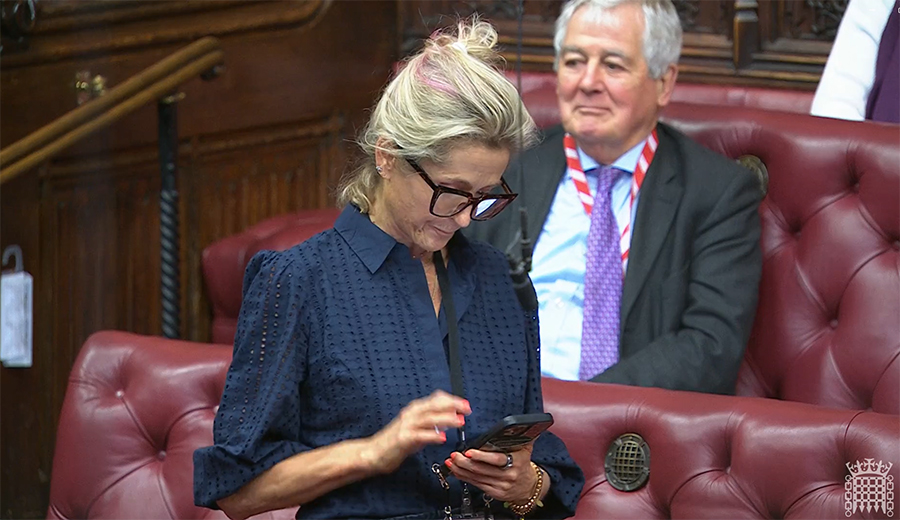
Responding for the UK Government, Baroness Merron acknowledged the problems described but emphasised that responsibility for commissioning wheelchair and community equipment services lies primarily with ICBs and local authorities.
She stated that there are no plans to publish a national strategy for wheelchair provision. Instead, she pointed to existing frameworks such as the Wheelchair Quality Framework, the NHS 10‑year health plan, and Personal Wheelchair Budgets, which are intended to support local improvement.
Baroness Merron acknowledged persistent delays, citing pandemic‑related backlogs and fluctuating referral rates. She highlighted requirements for ICBs to reduce waiting times over 18 weeks and eliminate 52‑week waits, with performance monitored through the Community Health Services Situation Report.
She also emphasised the need for integrated working between ICBs and local authorities, stating that improvements must be driven locally through existing structures rather than through a new national strategy.