- Back
- Back
- Back
- Back
- Back
- Back
- Back
- Back
- Back
- Back

BHTA members involved in community equipment, independent living, and assistive technology services are encouraged to review a new tender opportunity from Lancashire County Council for the delivery of community equipment services.
The service loans disability-related equipment to children and adults across Lancashire, including all 12 district areas, plus Blackburn with Darwen and Blackpool. The equipment is intended to help people maintain independence, support carers, improve quality of life, facilitate hospital discharge, and avoid hospital or care home admission.
Lancashire County Council is procuring a single-provider light touch framework agreement for community equipment services. The framework may be used by Lancashire County Council, Lancashire and South Cumbria NHS Integrated Care Board, and Blackburn with Darwen Council, either independently or jointly through call-off contracts.
The Community Equipment Service covers the loan of disability-related equipment to support children, adults, and carers across Lancashire and the participating authorities. This tender is suitable for SMEs and VCSEs, alongside larger providers, able to deliver community equipment services across a public sector health and social care environment.
The procurement is being run as an open procedure under the light touch regime. Each call-off contract under the framework may last for up to five years, including any initial term and extensions, provided that the total call-off term does not exceed five years.
The framework evaluation weighting is quality 50 percent, price 40 percent, and social value 10 percent. A Procurement Specific Questionnaire will also form part of the evaluation.
Tenders must be submitted electronically via the Lancashire iSupplier portal.
Tenders must be submitted by 11am on 10 July 2026. Questions should be submitted by 11am on 3 July 2026.
Access the full tender documentation, including specifications, pricing schedule, participation requirements, and award criteria, through the portal link above.
Contact Lancashire County Council for any enquiries: caphprocurement@lancashire.gov.uk.
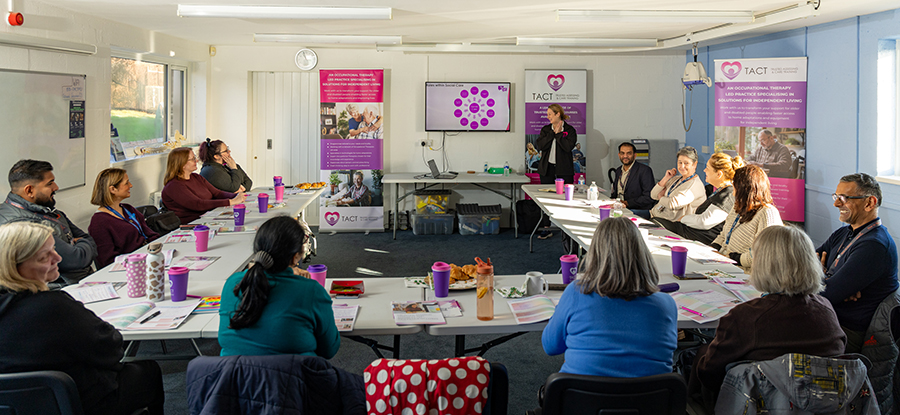
A number of British Healthcare Trades Association (BHTA) members are giving positive feedback on a Level 3 Trusted Assessor qualification for retailers that raises standards in the independent living sector.
In 2024, the BHTA worked in partnership with Trusted Assessing and Care Training (TACT) to launch a new course designed for retailers of independent living equipment. Delivered by TACT, the ‘Trusted Assessors: Assessing in the Retail Environment’ course is designed to accredit retailers as Trusted Assessors.
The course enables customer-facing staff to learn the skills involved in assessing for suitable home adaptations equipment. This development has enabled organisations across the sector to upskill staff to a standardised, independent set of competencies long recognised within health and social care.
Trusted Assessor competencies, first defined in 2005, are now widely used across the UK by health, social care, housing, and care teams. The qualification teaches learners to adopt an occupational therapy–based approach to assessments, combining theory with hands-on practical skills. Crucially, trainees learn how to identify when a case is complex and requires referral to an occupational therapist (OT). Trusted Assessors are qualified to assess a person’s needs and identify the most suitable equipment and adaptations to support independent living.
TACT’s OTs deliver the teaching, support learners with their assignments, run free monthly top-up webinars, and make additional resources available for free on its website. Learners complete training modules and a homework assignment to demonstrate their understanding and practical application of the course content.
As more organisations adopt the Trusted Assessor model, the independent living sector is better positioned to meet growing demand, reduce pressure on overstretched OTs, and ensure people receive timely, accurate guidance on the equipment that supports independent living.
Many retailers have found that the qualification not only enhances internal skill levels but also improves collaboration with local equipment and assessment pathways.
TPG DisableAids, a BHTA member based in Hereford, offers a strong example. Director Alastair Gibbs explained: “For TPG DisableAids the Trusted Assessor scheme has been a real boost. We have various staff trained from level 2 to level 4, and it has given us real credibility with housing associations and local authorities. Those looking for a differentiator and an indicator of commitment to quality found it in our association with BHTA and Trusted Assessor.”
This credibility strengthens tender opportunities for providers supplying independent living equipment, as the qualification offers a clear benchmark of assessment quality.
Recognition is growing within the OT profession as well. Brett Gilham from BHTA member company Laybrook noted: “We know how busy many OTs are, so the fact that we can demonstrate we have been trained and can provide assistance in the assessment process benefits all parties. It also means our staff across all levels have been trained to a set standard for assessing.”
Retailers are also seeing value in highlighting the qualification to the public. Dolphin South West, a BHTA member based in Devon, newly qualified, has launched a communications campaign to promote its enhanced capabilities.
Antonia Nixon, from Dolphin South West, said: “The Dolphin team enjoyed the training—learning and reinforcing what they know—and now we’re keen to let people know what this means when they deal with us.”
Some providers are taking the Trusted Assessor approach even further.
On 10 and 11 December 2025, BHTA member Wenman Healthcare hosted two free training workshops for organisations across the region that provide advice to the public on independent living. Twenty-four learners attended the two, one-day Level 2 accredited courses, delivered by TACT.
Attendees importantly represented a broad spectrum of local services, including NHS social prescribers, district housing teams, regional disability and carer charities, and homecare providers, who also benefited from the opportunity to network with peers.
TACT estimates that the programme will help more than 100 residents every day who receive advice from these organisations all year round, demonstrating the potential significant regional impact this training would have if rolled out more widely.
Participants reported a clear increase in their confidence when supporting older and disabled people. The course covered common health conditions, how local health and social care systems operate, communication skills, and key risk factors. Learners also explored a wide range of independent living equipment and typical solutions used across the region.
Confidence in the topic of independent living equipment rose from 52 percent being fairly or very confident pre-course to 100 percent afterwards. Both Wenman Healthcare and TACT were delighted with the outcomes.
Clare Barber, Director and OT at TACT, enthused: “We are passionate about improving access to much-needed equipment, and upskilling people working locally is one of the best ways to ensure residents get timely, accurate advice. Navigating the regional landscape of aids, equipment, and adaptations can be challenging, and understanding what’s available and how to access it can speed things up immeasurably.”
Ian Wenman, Managing Director at Wenman Healthcare, added: “People often aren’t aware of their entitlement to a needs-based assessment for equipment and home adaptations. This can ensure essential equipment is delivered to their home. They often struggle to know what equipment is relevant and helpful to a particular health condition.
“Families frequently want to explore additional items, and they can try a wide range—without obligation—by visiting our showroom. Our Trusted Assessors identify what’s needed and provide impartial advice, as well as providing a free home visit when required.”
The initiative demonstrates how retailers can act as local hubs for information, training, and support. By engaging organisations across their community, Wenman Healthcare aims to speed up access to essential equipment and strengthen cross-sector relationships.
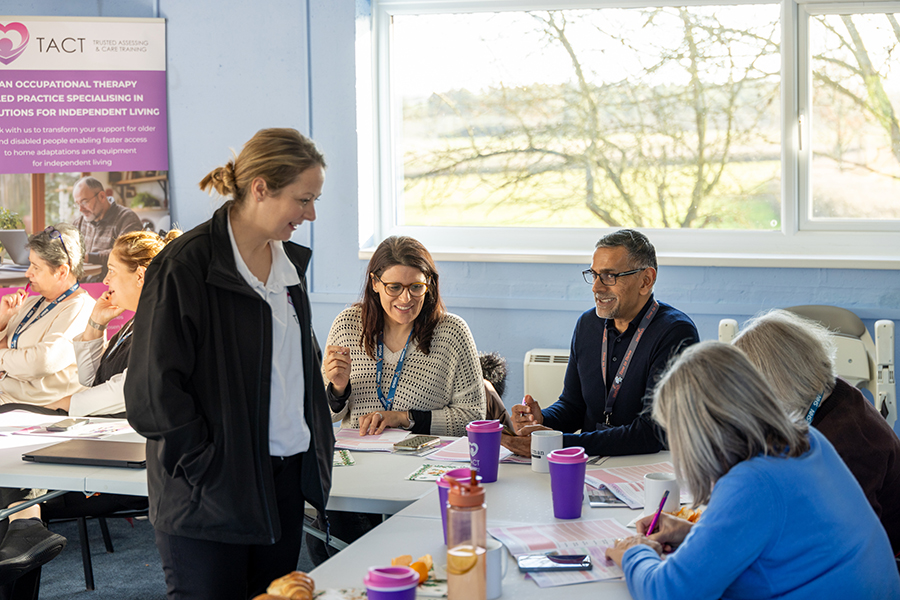
BHTA members can choose from either a one-day in-person course run at their premises or opt for the live webinar version delivered over a series of three dates.
In 2026, the webinar version involves studying for three three-hour live webinars running on:
Alternatively, members opt to join one of the main Trusted Assessor courses that include practical workshops, and these can be directly commissioned or accessed through TACT’s open courses running regionally.
All versions of accredited courses require learners to complete and pass a homework assignment, and, once qualified, Trusted Assessors can join the monthly webinar top-ups for 12 months.
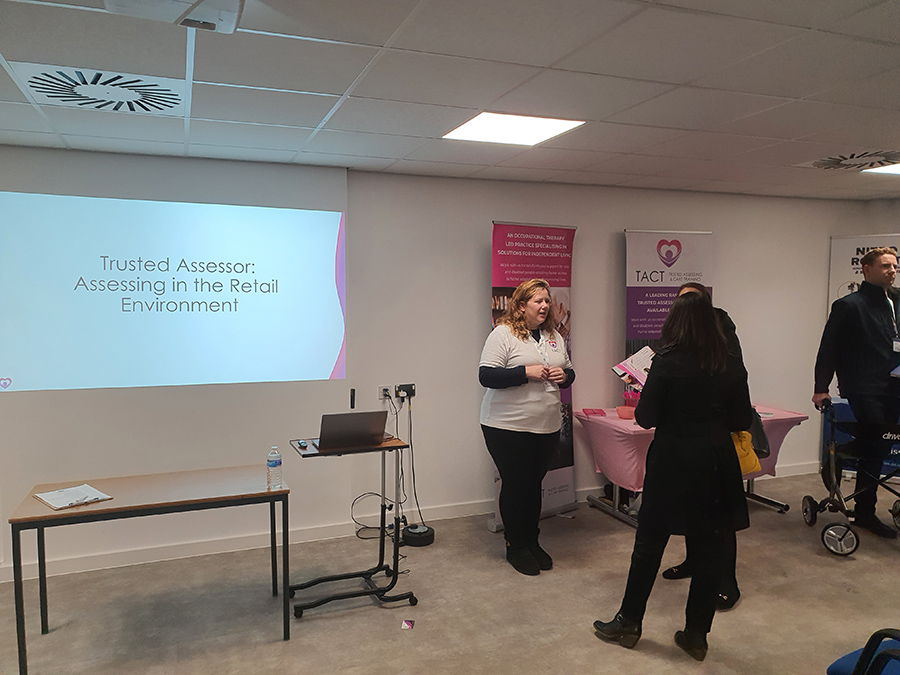
The British Healthcare Trades Association (BHTA) is working in partnership with Trusted Assessing and Care Training (TACT) to launch a brand-new course designed for retailers of independent living equipment.
The ‘Trusted Assessors: Assessing in the Retail Environment‘ course is designed to accredit retailer members as Trusted Assessors.
BHTA represents over 400 organisations in the UK who are involved in the manufacturing, distributing, and retailing of healthcare and assistive technology products. It operates a Code of Practice to ensure high-quality service levels for the sector.
This new training-based programme enables customer-facing staff to learn the skills involved in assessing for suitable home adaptations equipment. The course was developed by TACT in consultation with the BHTA and its members, and it is accredited by OCN London.
David Stockdale, Chief Executive at BHTA, commented: “This programme underlines BHTA’s commitment to quality and raising standards in the sector.
“The Trusted Assessor model is known and in widespread practice in health, social care, and housing services across the UK. This initiative enables our retail members to be aligned with a best practice approach in assessing for equipment that in turn means they can be integrated into local pathways.
“Older and disabled people can expect to gain faster access to important solutions for their independence and be confident in the impartial advice provided.”
Retailers of equipment for independent living are experts in the product solutions they range, and this enables them to check suitability and tailor products to individual people’s needs. Many retailers are relied on in their local areas to visit people at home and demonstrate equipment to help people to live independently.
The Trusted Assessor model is based in occupational therapy models of practice and learning this approach enables an Assessor to evaluate the person and their environment in a systematic way to identify the best solution. Assessors are taught when to refer a case to an occupational therapist (OT), and this ensures best use of staff and resources whilst speeding up access to much-needed equipment.
“We’re delighted to be working with BHTA to provide this Trusted Assessor course to their members,” said Clare Barber, Director of TACT and an OT specialising in this field. “It’s a splendid example of how staff already visiting older and disabled people at home can be taught to carry out simple assessments for home adaptations with a best practice approach based on the Comptency Framework.
“Expanding the range of Assessors working in the UK by harnessing the skills of this specialist retail sector is an innovative way of speeding up access to much-needed equipment.”
The announcement of the new course follows several months of consultation with the BHTA and its members.
The course has also received positive feedback from TPG DisableAids, a mobility equipment retailer and a member of the BHTA.
Alastair Gibbs, the director of TPG DisableAids, commented: “For TPG DisableAids the Trusted Assessor scheme has been a real boost. We have various staff trained from Level 2 to Level 4 and it has given us some real credibility with a number of housing associations and local authorities. Those that were looking for a differentiator and an indicator of commitment to quality found it in our association to BHTA and Trusted Assessor.”
BHTA members can find out more by email TACT on info@trustedassessing.com or visiting the TACT website and completing an enquiry.

With funding in the NHS and hospital discharges creating pressure on health and care services on a daily basis, it is possible to find equipment solutions yourself with help from British Healthcare Trades Association (BHTA) members.
This guidance article is designed to advise consumers about the options available when self-funding (paying for equipment yourself) that can help you or a family member return home quicker and maintain an independent life.
Some independent living products are less expensive than you think and can make all the difference between a longer stay in hospital or a quicker discharge. Accepting using a product that improves your independence can also prevent the need to go to a hospital in the first place.
Member companies have skilled and trained staff across the UK, who are already working closely with the NHS and other healthcare professionals and are uniquely placed to help.
Take the first steps by talking to your local BHTA retailer and find out about the products that can assist you to be independent and mobile.
We have put products you might need into room settings to help guide you through the types of things you might want to consider to help you around your home. There are many products that are affordable to make things easier for you.
If you have arthritis or have had a stroke, there is shaped handle cutlery that gives you a better grip to help you eat. They are easy to take with you when eating out, so you can enjoy your meals without having to ask for assistance to have food cut up. If you prefer your own cutlery, foam grips can easily slip on to give you a better grip.

Cups with lids and two handles, plates with raised edges, together with non-slip mats can help you eat. Other useful items to consider are openers for jars and tins, cleaning and cooking equipment, a wheeled trolley, or a one-handed tray, which will enable you to move food from the kitchen to the table.
That designer sofa that you bought years ago can suddenly be too low if you’re struggling to sit down or stand back up. You can choose block raisers, making it easier to get on and off, but if this is a struggle you can choose a high-backed chair that can be tailored to your height.
If you need assistance all the way to standing, a gentle riser recliner chair with motors will lift you to a standing position at the touch of a button. Relaxing is the opposite flick of the controls. With a wide range of fabric, you can choose a chair to match close to your existing furniture.

As we get older, it’s not always easy to bend the knees to sit on the toilet, so there are many choices you can consider to improve the situation. A four-inch raised toilet seat on top of your existing toilet can help you to sit down without the help of a carer.
If you’re a bit unsteady and have balance issues, a toilet frame with seat can help you to get up and down easier. These can sometimes save having a commode in other rooms, such as the bedroom, but the choice is available to meet the different needs of everyone. Some commodes can have a dual function as a shower chair, giving the additional benefit of two ways of independent living.
Having a bath sometimes becomes more difficult when you are unable to lift yourself in and out and lift your legs over the side. Portable bath lifts can offer a solution. The bath lift sits in the bottom of your existing bath, and, once you have side transferred onto the seat, the battery-powered motor lowers you gently into the water to enable you to relax and wash. The advantage of a bath lift is that some are removable for other bath users in the home and can travel with you in the car if going away on holiday.
Another useful washing aid is a non-slip bathmat, designed to make bathing safe and create a secure environment.
If a bath is no longer an option, some BHTA members will be able to offer level access showers or a wet room, but these require specialist advice and assessments.

Handrails and bannisters down the side may just be the help you need to navigate your stairs, but when getting to your bedroom becomes too difficult you still have choices.
Stairlifts or through-floor lifts allow you to stay in your own home longer. It may seem like an expensive option, but compared to the cost of moving house or into a care home, this could be a better option to consider.
BHTA members have the knowledge and skills to advise you what your best solution is. They can help guide you through any grants that may be available.
Specialist profiling beds, rails, and pillows can make a difference to a great night’s sleep. If you have to spend more time in bed, profiling beds offer you multi-positioning allowing you to sit up, lie down, and help to redistribute pressure by the ease of changing position. There are plenty of choices you can make inside your home to make life easier and are all available through your local BHTA retailers and suppliers.
Sometimes you can manage to move around the home but going further afield can be another challenge. The next section demonstrates some of the choices you may wish to consider.
Walking can become more difficult and reduce the range you can travel in your local community or further afield. If you need a small amount of walking assistance, a rollator shopping trolley can offer you support when walking, and some have seats to allow you to rest when you need to.
Mobility scooters open up further choices depending on your aims, and a BHTA retailer will be able to advise you. A lightweight transportable scooter can be dismantled and put into the boot of your car for visits to other places and to take on holiday. These will offer a reduced battery range, as their size is smaller to make them easier to lift.

A mid-range scooter for use on the pavement offers bigger batteries, longer range, and better kerb climbing with larger wheels. These are ideal for getting to your local shops.
If you have been a car driver, the loss of a car may mean that you want to consider a mobility scooter for use in the road, allowing you to go further. These can go up to 8mph and may offer you the range to continue your adventures and go that bit further.
Help and advice is free from all BHTA member companies, all of which sign up to our Code of Practice, allowing you to buy with confidence.