- Back
- Back
- Back
- Back
- Back
- Back
- Back
- Back
- Back
- Back
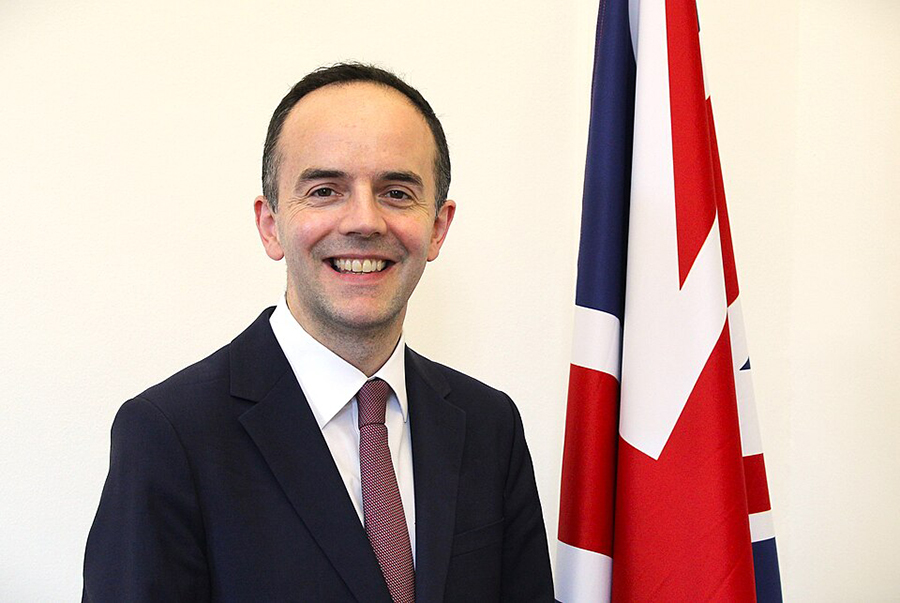
The Rt Hon James Murray MP has been appointed Secretary of State for Health and Social Care following the resignation of The Rt Hon Wes Streeting MP from government.
The appointment was approved by The King on 14 May 2026, with James Murray taking over responsibility for the Department of Health and Social Care (DHSC), including oversight of NHS delivery and performance, as well as social care policy.
James Murray has served as the Member of Parliament for Ealing North since 2019. Prior to his appointment to DHSC, he served as Chief Secretary to the Treasury from September 2025 and previously held the role of Exchequer Secretary to the Treasury. Before entering Parliament, he served as Deputy Mayor of London for Housing and Residential Development between 2016 and 2019, following a decade as a local councillor in London.
Wes Streeting confirmed his resignation in a letter to Prime Minister Sir Keir Starmer, stating that he had “lost confidence” in the Prime Minister’s leadership following recent political developments and local election results. An exchange of letters between the Prime Minister and Wes Streeting was subsequently published by the government.
In his resignation letter, Wes Streeting reflected on NHS performance during his tenure, pointing to reductions in waiting lists, improvements in ambulance response times, and increased NHS productivity. He also referenced broader political disagreements within government and concerns over Labour’s future direction, including the scale of recent local election losses and the wider political challenges facing the government.
Responding to the resignation, Prime Minister Sir Keir Starmer thanked Wes Streeting for his service and described his contribution to NHS reform as significant. In his reply, the Prime Minister highlighted progress including reduced waiting lists, improvements in patient experience, and ongoing policy initiatives such as the 10 Year Health Plan, the National Cancer Plan, and reforms to adult social care.
The Prime Minister also acknowledged the political challenges facing the government following recent local election results, while expressing hope that Wes Streeting would continue to play an important role within the Labour Party in future.
James Murray now assumes leadership of DHSC at a time of continued focus on NHS recovery, social care reform, workforce pressures, and wider healthcare policy development across the UK.
Reacting to the announcement of the new Secretary of State for Health and Social Care, David Stockdale, Chief Executive of the BHTA, said: “We congratulate James Murray MP on his appointment as Secretary of State for Health and Social Care at a pivotal time for the sector.
“With major structural changes ahead, including the proposed bill to abolish NHS England outlined in the King’s Speech 2026, alongside ongoing concerns around social care, wheelchair services, and community equipment provision, the BHTA looks forward to working constructively with the new Secretary of State to help improve timely access to the right equipment and support for people across the UK.
“We also hope to continue engaging with government on long-standing sector priorities, including the BHTA’s campaign to remove VAT on life-saving public access defibrillators.”

The UK Government has published the King’s Speech 2026, setting out its proposed legislative programme for the next parliamentary session.
Several proposed bills could affect BHTA members, including measures on NHS reform, patient data, cyber security, late payments, competition, and steel supply chains.
One of the most significant announcements for the healthcare sector is the NHS Modernisation Bill, which will abolish NHS England by transferring its functions into the Department of Health and Social Care or the wider system. The bill will also enable a Single Patient Record, allowing people to view their health and social care records securely on the NHS App. This may be relevant to members working in digital health, data, interoperability, or services that may link to the NHS App in future. Members can read the BHTA’s position on the abolition of NHS England for further context.
The Cyber Security and Resilience Bill would require organisations providing essential services to report more harmful cyber incidents to their regulator and the National Cyber Security Centre within 24 hours, followed by a full report within 72 hours. It would also introduce tougher enforcement, including turnover-based penalties for serious breaches.
The National Security Bill would update the Computer Misuse Act 1990 and create a Cyber Crime Risk Order. This may affect how cyber risks are investigated, prevented, and managed across digital systems and services.
For businesses, the Small Business Protections (Late Payments) Bill would introduce measures to tackle late payments between businesses. These include maximum payment terms of 60 days, mandatory interest on late payments at eight percent above the Bank of England base rate, and new powers for the Small Business Commissioner to investigate poor payment practices, adjudicate disputes, and fine businesses that fail to comply.
The Competition Reform Bill could affect members where competition enforcement, market reviews, or merger activity shape healthcare and assistive technology markets. It would give the CMA Board a role in decisions on mergers and market investigations, aiming to make decision-making more consistent, predictable, and accountable.
The Steel Industry (Nationalisation) Bill provides a route for the government to nationalise steel companies or their operations, provided the public interest test in the legislation is met. The announcement follows wider government measures on steel, including changes due to come into effect from 1 July 2026 that will reduce tariff-free import quotas and introduce a 50 percent tariff on steel imports above these limits. This is relevant to members that manufacture with raw steel or rely on steel as a significant input cost, as the changes could affect costs, availability, procurement decisions, and manufacturing strategies.
The BHTA will continue to monitor the proposed legislation and assess the implications for members as the bills progress through Parliament.
The BHTA is hosting a free webinar at 2pm on 21 May 2026 to examine the current policy and political landscape. It will cover the key announcements from the King’s Speech 2026 and the outcome of the May elections, with a focus on what these developments mean for BHTA members.