
- Back
- Back
- Back
- Back
- Back
- Back
- Back
- Back
- Back
- Back

The Office for Life Sciences (OLS) has announced the appointment of Kenan Poleo as Director, effective from May 2026.
Kenan succeeds Roz Campion and will lead the cross-government delivery of the UK’s Life Sciences Sector Plan, which forms part of the Government’s Industrial Strategy. The role also includes responsibility for innovation priorities linked to the 10 Year Health Plan.
Reporting jointly into the Department for Science, Innovation and Technology (DSIT), the Department of Health and Social Care (DHSC), and the Department for Business and Trade (DBT), the Director works closely with OLS Executive Chair Steve Bates OBE to support the Government’s ambition for the UK to become the world’s third most important life sciences economy by 2035.
Kenan brings extensive experience from across government, healthcare, and international trade. Most recently, Kenan served as Consul General and Trade Commissioner for Eastern Europe and Central Asia. Prior to this, Kenan held senior trade and innovation roles including Her Majesty’s Deputy Trade Commissioner for Europe and Head of Global at Innovate UK.
Kenan’s earlier career included a range of senior UK Government positions focused on manufacturing strategy, energy, and environmental legislation, and the chemicals industry. Before entering government service, Kenan worked within the NHS, commissioning services related to sexual health, HIV/AIDS, refugee and homelessness health, and support for Black and Minority Ethnic communities.
BHTA members may wish to note the appointment given the Office for Life Sciences’ ongoing role in shaping healthcare innovation, regulation, and industry collaboration across the UK.
Members wishing to contact the Office for Life Sciences can do so via: Director.OLS@officeforlifesciences.gov.uk
The NHS is strengthening its commitment to innovation and efficiency through the introduction of new value-based procurement (VBP) standards for medical technology.
The Department of Health and Social Care (DHSC) has published the ‘Value Based Procurement Standard Guidance for Medical Technology’, designed for use within the NHS’s 13 VBP pilots. Although the guidance has been created to support these pilot projects, it also provides valuable insights and practical applications for the wider medical technology sector.
The guidance is intended for use by both NHS buyers and suppliers to help assess not only the cost of medical devices but also the broader value they deliver to patients, staff, and the healthcare system.
This shift towards value-based decision-making comes alongside the government’s announcement that the NHS will invest in pioneering technology to help reduce waiting lists and improve productivity across services. Together, these initiatives aim to ensure that procurement decisions increasingly reward technologies that demonstrate measurable improvements in outcomes, efficiency, and sustainability.
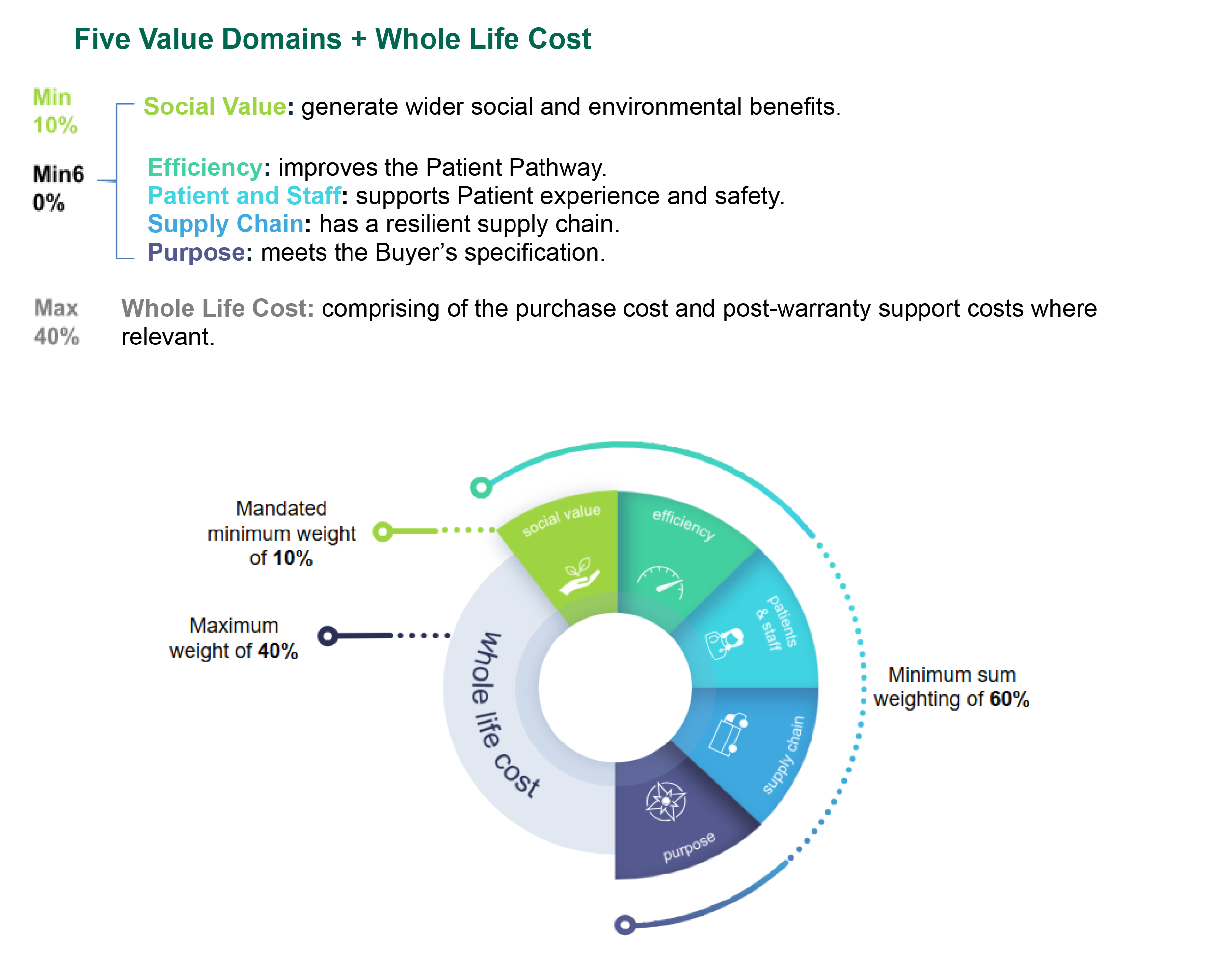
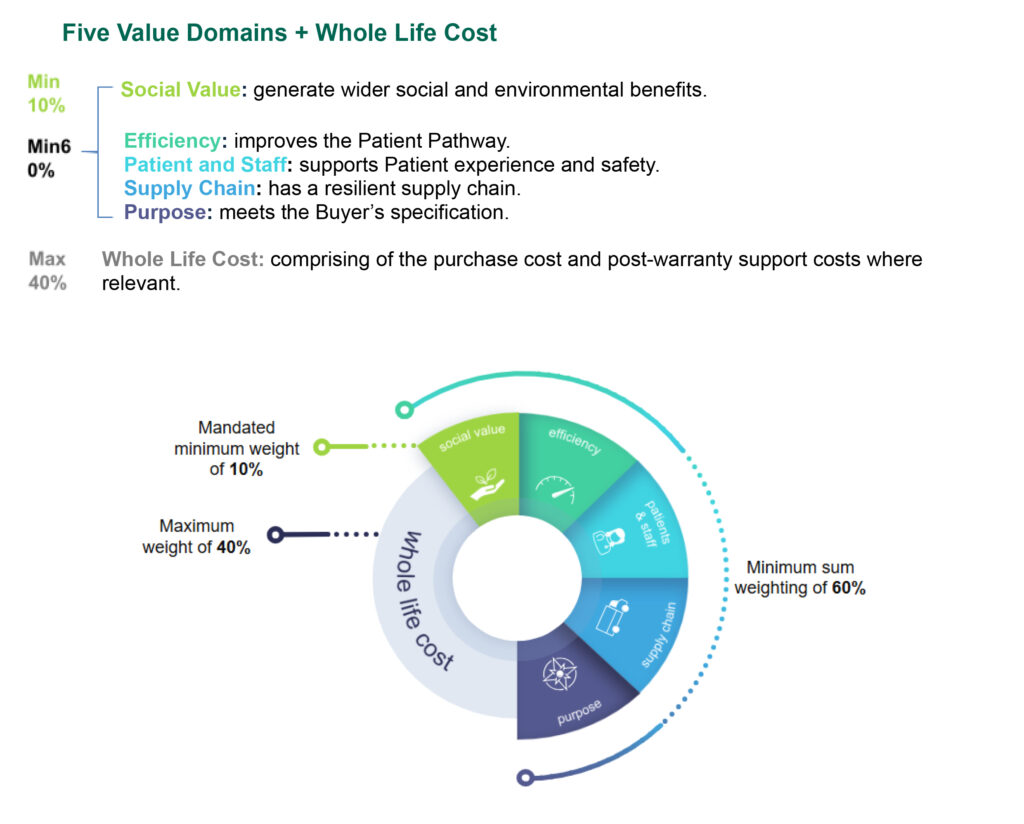
The new DHSC guidance establishes a framework for evaluating medical devices across five domains: social value, efficiency, patient and staff outcomes, supply chain resilience, and purpose. A sixth factor, whole-life cost, complements these domains by ensuring that price is considered within the broader context of lifecycle value.
Under the new framework, NHS buyers are encouraged to assess tenders not solely on upfront cost but on the overall contribution a product or service makes to the health system.
Each domain can be weighted according to the needs of a particular procurement, but social value must account for at least 10 percent of the total weighting, in line with the NHS Social Value Playbook. Overall, at least 60 percent of procurement scoring must relate to the value domains, while whole-life cost is capped at 40 percent.
This marks a step away from purely price-driven procurement and towards a model that prioritises long-term outcomes, sustainability, and patient benefit.
Each of the five value domains provides a structured set of questions and evaluation criteria for buyers and suppliers. The social value domain encourages suppliers to demonstrate how they will reduce carbon emissions, manage modern slavery risks, or improve sustainability in packaging and disposal. The efficiency domain considers how a product can simplify patient pathways, increase hospital or community productivity, and support accurate measurement of outcomes. The patient and staff domain emphasises safety, patient experience, and health equity, while supply chain and purpose focus on resilience, interoperability, and ease of use.
Suppliers are expected to provide measurable, evidence-based responses that show how their technologies can deliver tangible improvements. This includes providing baseline data, real-world evidence, and models that quantify benefits such as reduced complications, improved patient satisfaction, or optimised workforce time.
The guidance is part of a wider shift within the NHS towards integrating innovation, sustainability, and productivity.
Andrew New, CEO of NHS Supply Chain, said: “Innovative technology has a vital role to play in delivering faster, simpler and more effective care for patients. Through this new approach, we can ensure that procurement not only secures the best value for money but also supports the NHS in achieving its long-term goals around efficiency, sustainability and patient outcomes.”
BHTA member companies supplying medical technology to the NHS will need to engage more deeply with buyers to demonstrate measurable value through data, evidence, and partnership. This includes clearly articulating how their products support clinical efficiency, improve patient experience, and align with NHS sustainability objectives.
The framework also highlights the importance of collaboration between suppliers, clinical teams, and procurement professionals. Bidders are encouraged to provide evidence that supports their claims, including quantitative data, modelling, and independent validation where possible.
The guidance advises buyers to ensure proportionality in their tender requirements to support the participation of small and medium-sized enterprises (SMEs) within the medtech sector.
Suppliers may wish to focus on areas such as:
By preparing evidence-rich submissions aligned to the five value domains, suppliers can better position themselves to succeed in NHS tenders under this new approach.
The VBP guidance underscores a wider movement within the healthcare system towards smarter, more sustainable procurement. As the NHS aims to make better use of technology to enhance care delivery, these frameworks are helping to ensure that procurement decisions reflect genuine long-term value.
Andrew added: “By focusing on value rather than volume, we are creating the conditions for innovation to thrive — enabling suppliers to bring forward solutions that improve outcomes for patients and deliver efficiencies for the NHS.”

The UK Government has announced enhanced collaboration between the Medicines and Healthcare products Regulatory Agency (MHRA) and the US Food and Drug Administration (FDA).
The collaboration is intended to accelerate innovation, strengthen patient safety, and reduce barriers to transatlantic market access for medical technologies and AI.
The MHRA will deepen its regulatory collaboration with the FDA, with a shared ambition to advance alignment and reciprocity.
During the Advanced Medical Technology Association conference in San Diego, MHRA Chief Executive Lawrence Tallon highlighted the agencies’ commitment to accelerating joint initiatives and policy development, supported by strategic opportunities for cooperation.
The MHRA has launched the National Commission on the Regulation of AI in Healthcare, bringing together UK and international experts, including contributors from the United States. The commission will develop recommendations to support the safe and transparent use of AI-driven medical technologies and to contribute to international alignment.
The agency has also confirmed plans for new international reliance routes designed to improve international investment and increase UK access to medical devices that have already been approved by trusted regulators, including the FDA.
According to the announcement, the reliance framework is intended to include products cleared through the FDA’s 510(k), De Novo, and Premarket Approval (PMA) pathways.
For BHTA members operating in the UK and internationally, the planned international reliance routes are expected to facilitate faster UK market access for devices already approved by trusted regulators.
The strengthened collaboration between the MHRA and FDA, together with the establishment of the National Commission on the Regulation of AI in Healthcare, signals ongoing work to align approaches to regulating medical technologies and AI.
The medtech regulatory reforms in Great Britain are intended to enter legislation in 2026 and open new reliance routes from 2027.

At the recent joint British Healthcare Trades Association (BHTA) and AXREM conference, David Lawson, Director of Medical Technology and Innovation at the Department of Health and Social Care (DHSC), set out the evolving landscape for medical technology.
‘The Future of MedTech – Innovating for Tomorrow’ conference was held on 13 May 2025 at The Mercure, Northampton.
David’s presentation was the final part of a compelling conference talk titled ‘Big Picture: What is the Future Policy Landscape for Medtech?’. The previous speaker, Nata Zaman, discussed NHS England’s New Hospital Programme and what that means for medtech.
David reflected on the MedTech Strategy alongside and some of the upcoming and ongoing DHSC initiatives that are crucial to medtech businesses across the UK.
Despite the frequent changes in ministers and departmental structures over the past few years, the original challenges identified in the MedTech Strategy remain highly relevant: supply resilience, innovation adoption, data infrastructure, and markets.
With the NHS under significant pressure and few easy options to increase funding or expand the workforce, medtech is increasingly seen as a key lever for transformation. Innovation adoption is not just a priority for healthcare delivery; it’s also vital to the success of the broader Industrial Strategy, where life sciences remains one of the UK’s “crown jewels”.
Technology as a solution to transform healthcare will also likely be flagged in the upcoming 10-year health plan, David noted.
David highlighted the importance of value-based procurement as a mechanism to support consistent decision-making and better uptake of technology. He acknowledged the lack of standardisation currently affecting procurement: “We don’t today have any standard of how medical technology should be assessed… so we shouldn’t be surprised when we see huge variation”.
To address this, the DHSC has been co-developing a simplified methodology – described as a “ladybird guide to procurement” – that incorporates a 40/60 weighting in favour of quality over price. It includes domain-based question banks for local teams to select from, offering clarity for both buyers and suppliers. Shadow testing is already underway with eight procurement teams, and a national launch is planned for January 2026.
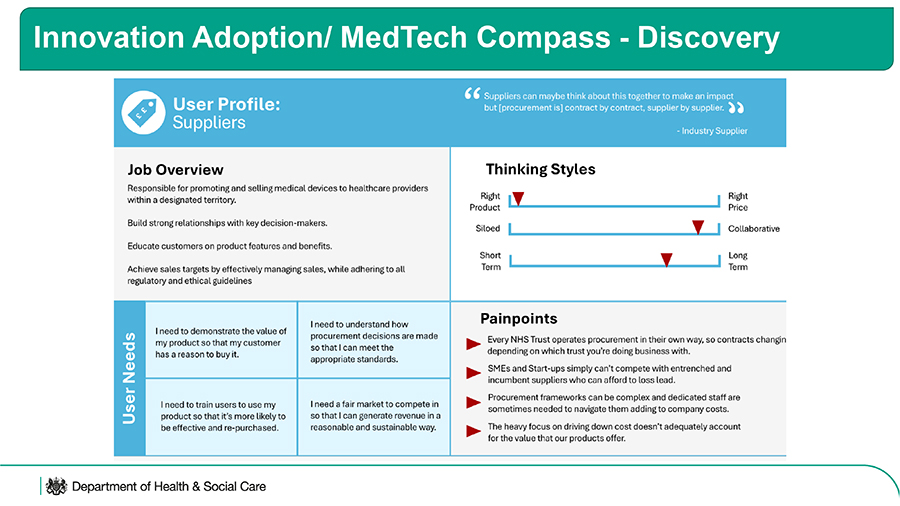
A major development currently in progress is the DHSC MedTech Compass, which is described as “a single source of information where there’s visibility of products within categories and information on the various attributes of those products”.
David acknowledged the challenges SMEs face in getting products in front of decision-makers across the country: “People may not be aware that actually you have a product because SMEs don’t have the resource to be able to go around the whole country to make everyone aware.”
The Compass aims to not only showcase available technologies but also introduce a ‘passporting’ function to reduce repetitive data submissions about the same technologies to NHS trusts. Having completed its discovery phase, the project is now entering its alpha design stage this summer, with beta testing expected in 2026.

Crucial to both the Compass and the wider ambition for smarter regulation and procurement is a Product Information Management (PIM) system. As David noted: “We don’t have a single version of truth in terms of medical devices.” Poor data quality is hampering post-market surveillance regulatory requirements and innovation uptake.
The PIM is now entering its beta build phase. A private beta involving industry and health partners will follow shortly, ahead of a full public launch in January 2026. David stressed that the PIM will underpin future initiatives, including a more “risk-proportionate” regulatory approach from MHRA.
On the topic of the Part IX Drug Tariff, David acknowledged its complexity: “I describe Part IX like an onion. You peel a layer, and then suddenly another layer appears”. After extensive work to modernise categories and introduce logical groupings, a new scoring framework will be implemented this month.

A new temporary listing process will allow products with emerging evidence to be included on the tariff while further data is collected. David also flagged future work on local formularies, noting the lack of national guidance and the inconsistent practices this leads to: “There are certain parts of the country that [suppliers] don’t bother engaging with because of the approach that they take”.
A forthcoming report from National Voices, drawing on input from over 650 patients, will help ensure future categorisation and procurement processes better reflect patient priorities and lived experiences.
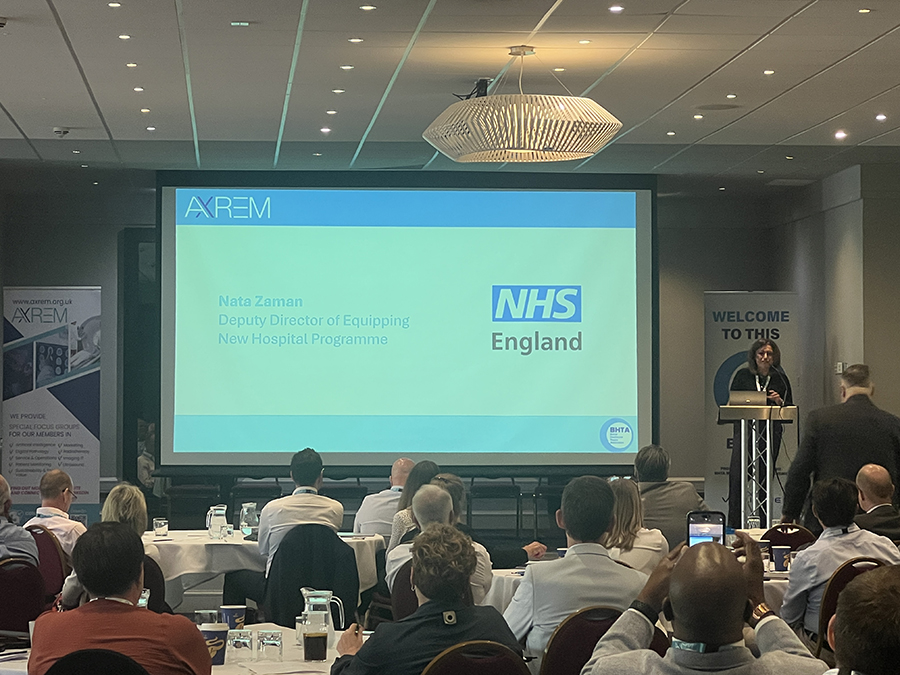
At ‘The Future of MedTech – Innovating for Tomorrow’ conference, held on 13 May 2025 at The Mercure in Northampton and jointly hosted by the British Healthcare Trades Association (BHTA) and AXREM, attendees heard a compelling call to action from Nata Zaman, Deputy Director of Equipping New Hospital Programme at NHS England.
In the second part of a compelling talk titled ‘Big Picture: What is the Future Policy Landscape for Medtech?’, Nata outlined how the design and construction of new hospital infrastructure must now be inseparable from the integration of medical technologies.
The first part of the talk was delivered by Heather Hobson from the Office for Life Sciences. She outlined how the upcoming Life Sciences Sector Plan is set to shape the future for medtech companies across the UK.
Nata made it clear: “Infrastructure and medtech are no longer two separate conversations. They are now one of the same because the reality is you can’t deliver the future of healthcare if you are still designing inside it.”
This vision is at the heart of the New Hospital Programme, a government-backed initiative with £15 billion allocated every five years, providing essential stability beyond the annual financial cycle.
Importantly for BHTA members, Nata emphasised that the programme is not just about building physical spaces. “It’s about making sure that this space is ready for the kind of technologies that will be coming down the line,” she said.
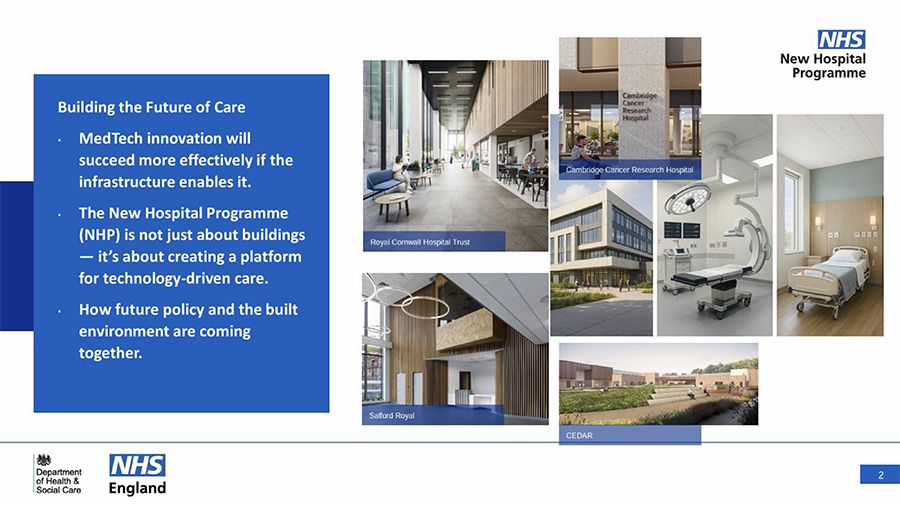

Legacy hospital environments have often hindered medtech deployment, with infrastructure acting as a barrier rather than a foundation. This new approach aims to reverse that, ensuring that design and build accommodate technological innovation from the outset.
With plans entering delivery phases and hospital schemes being finalised, the window for shaping this future is open, but it won’t be forever. “Once something is built, we are locked in for decades,” Nata warned, urging the industry to engage early to avoid missed opportunities.
Central to this shift is Hospital 2.0 – a standardised platform setting the baseline for room types, technical specifications, physical systems, and sustainability targets. Nata explained that this shared foundation “means you can start designing with confidence. You don’t have to reinvent for every space and every location”. For suppliers, this unlocks the potential for scale, consistency, and smoother integration.
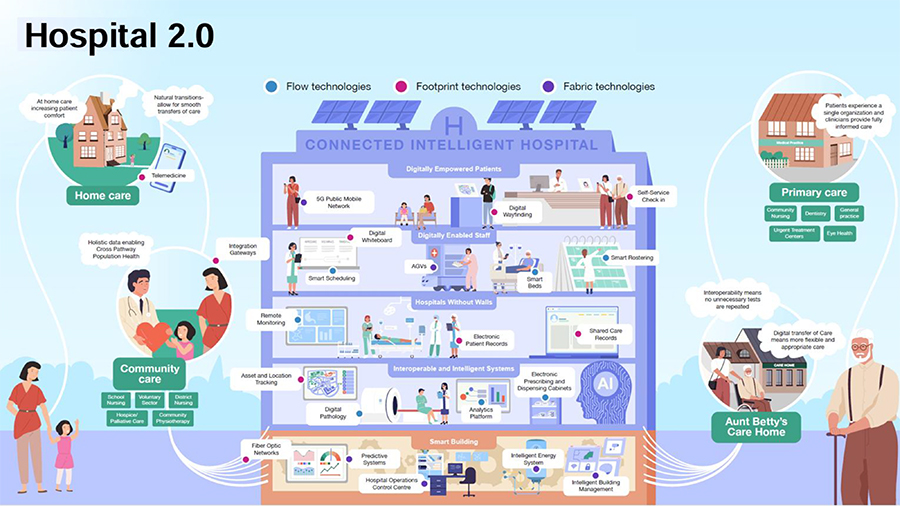
The ambition extends well beyond current needs. “We’re trying to futureproof this. Not just for what we know we need now… but what we haven’t even thought about yet”. Key elements being built into infrastructure now include digital-ready power and connectivity, data-enabled layouts, asset tracking, and interoperable systems that support plug-and-play upgrades. As Nata put it: “If it works in one room, it should work in 500 rooms.”
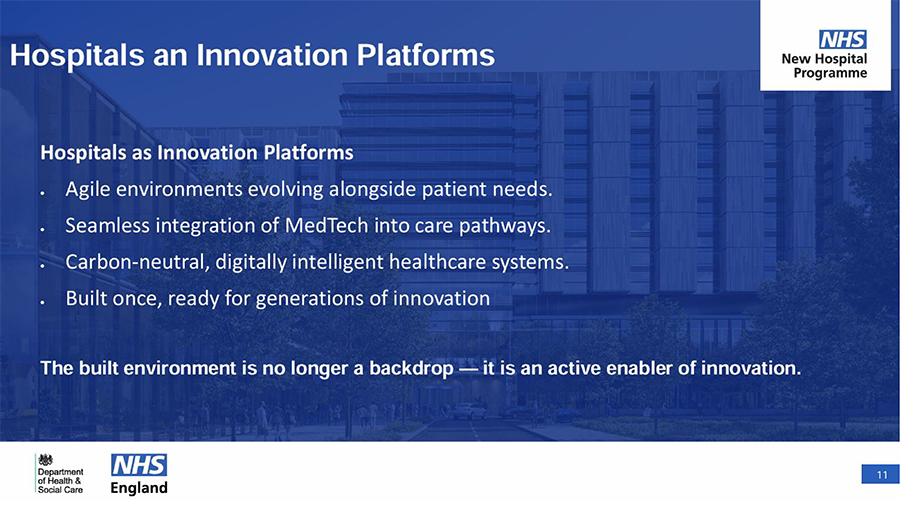
Fundamentally, these new hospitals aim to be active platforms for innovation. “We are not just building hospitals passively anymore. We are building them as innovative platforms, places that are designed to evolve,” Nata said. This means treating technology not as an afterthought or retrofit, but as an intrinsic part of the architecture, supporting smarter workflows, sustainability, and a better experience for patients and clinicians alike.
Speaking to the medtech sector, Nata concluded: “If your products aren’t designed with this future in mind, we risk repeating the mistakes of the past.” But with collaboration, adaptability, and shared vision: “We ensure that we can deliver successful hospitals for our future generations.”
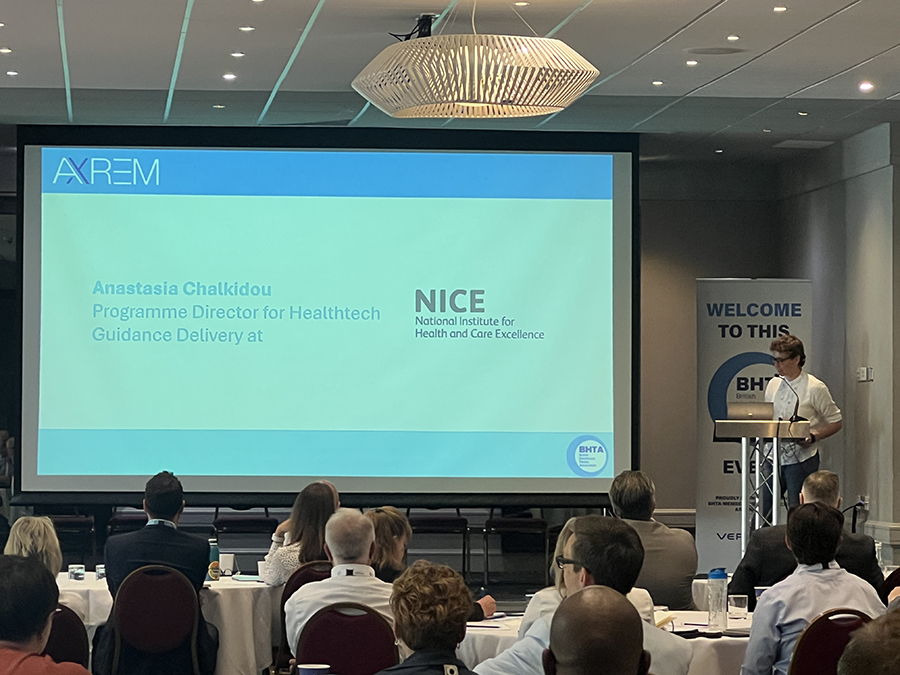
Presented by Anastasia Chalkidou at ‘The Future of MedTech – Innovating for Tomorrow’, hosted by the British Healthcare Trades Association (BHTA) and AXREM on 13 May 2025 at The Mercure, Northampton.
Anastasia Chalkidou, Programme Director for Healthtech Guidance Delivery at NICE, delivered a clear message to delegates at this year’s BHTA and AXREM conference: medtech innovators now have more opportunities than ever to engage with NICE’s updated and more transparent evaluation processes.
Speaking during the second part of an engaging talk titled ‘Regulation in the Medtech Sphere’, Anastasia provided a high-level overview of the organisation’s transformation and its implications for the healthtech industry.
The first part of the talk was delivered by Dr Rob Reid, Deputy Director of Innovative Devices at the MHRA, which focused on the upcoming UK medtech regulations.
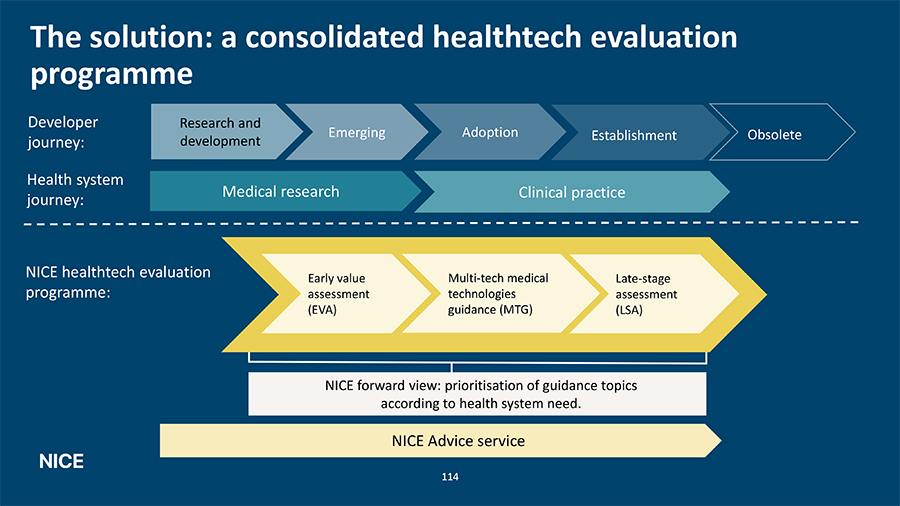
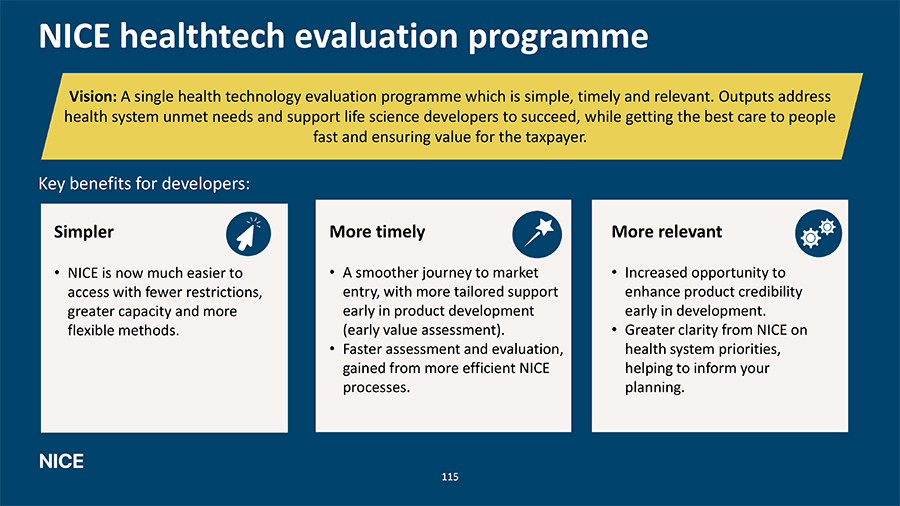
Over the past three years, NICE has undertaken a major transformation, which Anastasia explained is built on three core pillars: producing guidance that is more timely, more relevant, and has greater impact. For industry, this means a simplified and more accessible evaluation programme, with increased capacity and flexibility, and guidance that is better aligned with NHS system needs.
“We now have an early value assessment. That has become business as usual since last 12 months,” said Anastasia. This approach allows NICE to evaluate promising medtech, digital, AI, and diagnostic technologies sooner. These early assessments give conditional recommendations, provided there is a plan in place for further evidence generation, developed in partnership with stakeholders.
This marks a departure from the previous single technology evaluation model. With early value assessments, NICE is tackling the challenge of evaluating multiple products serving the same purpose. Now, NICE is able to make recommendations across groups of technologies, reflecting real-world usage and procurement within the NHS.
Another important development is NICE’s Prioritisation Board, which has now been operating for a year.
“It comes with a framework that explains in detail how we work on topic intel, the type of requirements that something needs to fulfil to be selected for evaluation with NICE,” explained Anastasia.
Decisions made by the board are publicly available and open to challenge, and NICE actively encourages input from clinicians and manufacturers to suggest technologies for evaluation as well as challenge certain decisions.
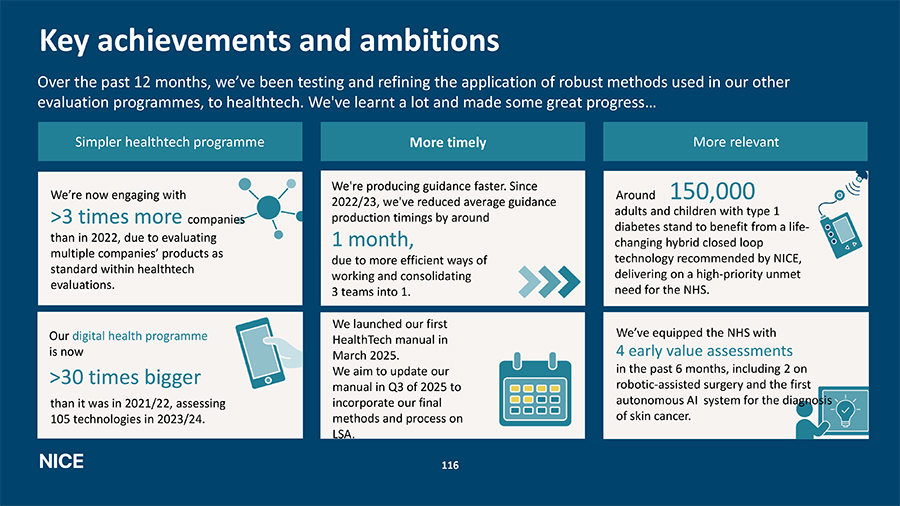
The HealthTech Evaluation Programme has seen notable growth. NICE’s digital health programme has also expanded significantly, with a threefold increase in evaluated products. NICE has also harmonised its processes with the publication of its unified healthtech manual, launched in March 2025, now moving into full implementation.
This harmonisation replaces fragmented and inconsistent evaluation methods with a single framework tailored to different types of technology. It promises more consistent timelines, enhanced support for evidence generation, and better alignment with wider NHS priorities. “It’s much easier now to access with fewer restrictions, greater capacity, and more flexible methods,” said Anastasia.
Beyond earlier and broader evaluations, NICE is piloting a late-stage assessment model. This focuses on high-spend, high-variation technologies already on the NHS procurement list, to determine whether pricing is justified and whether incremental innovation warrants broader adoption. This approach, said Anastasia, aims to ensure NICE “looks at incremental innovation and whether the price variation is justified”.
NICE’s transformation was shaped by early insights from the health system, which identified key needs: earlier signals of which technologies meet system priorities, more evaluations of digital solutions, and guidance on technologies already in market. NICE’s current programmes directly respond to these, providing earlier and more useful information for procurement, investment, and strategic decisions.
The message for industry is clear: whether a product is at the R&D stage or already in use, NICE now offers multiple routes for evaluation, conditional recommendation, and eventual system-wide adoption.
For BHTA members, NICE’s transformation presents a timely opportunity to engage with NICE earlier, more effectively, and with greater clarity on how products can achieve both recognition and adoption across the NHS.
See some of the slides from Anastasia’s presentation below:
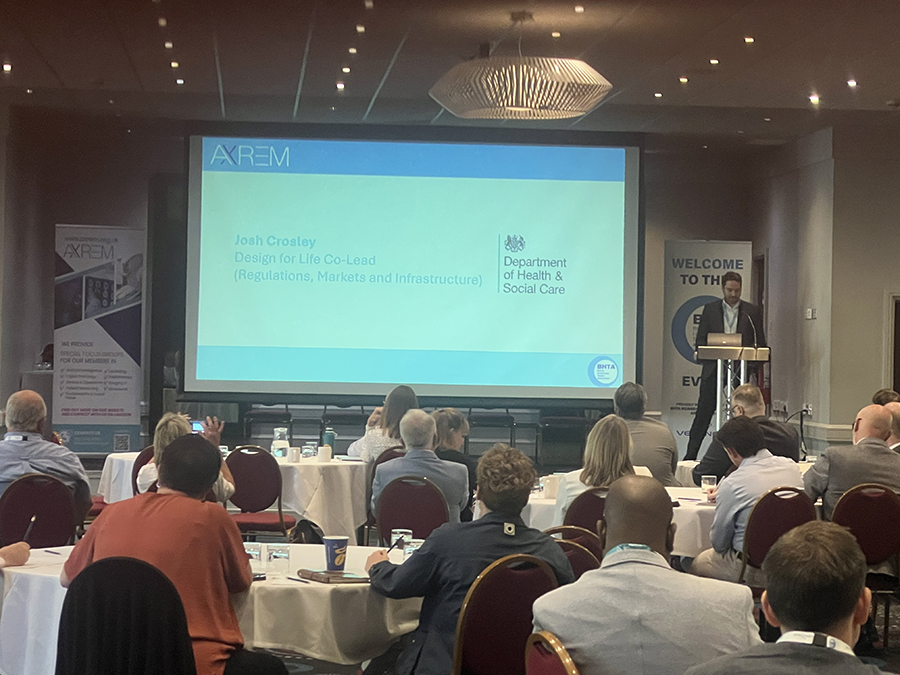
At ‘The Future of MedTech – Innovating for Tomorrow’ conference, Josh Crosley, Co-Lead of the Design for Life programme at the Department of Health and Social Care (DHSC), delivered the third part of a compelling talk titled ‘Building a Sustainable Future through Responsible Procurement’.
The session recapped the Design for Life programme and the opportunities this presents for the medtech sector.
Held on 13 May 2025 at The Mercure in Northampton and jointly hosted by the British Healthcare Trades Association (BHTA) and AXREM, the first two parts of the conference talk were delivered by Chris Taylor from Philips Health Systems and Alexandra Hammond from NHS England.
Design for Life is a flagship DHSC programme aiming to create a circular economy for medical products. Rather than the traditional linear model – take, make, dispose – the initiative focuses on reusing, remanufacturing, and recycling medtech devices to keep them in circulation for as long as possible. Importantly, its scope includes a wide range of medtech products used in patient care, from PPE to surgical equipment.
Born out of the supply chain shocks caused by COVID-19 and the war in Ukraine, the programme’s core goal is to increase resilience within the NHS. By reducing dependence on single-use products and extending the lifecycle of products, Design for Life helps ensure continuity of care, even under strain.
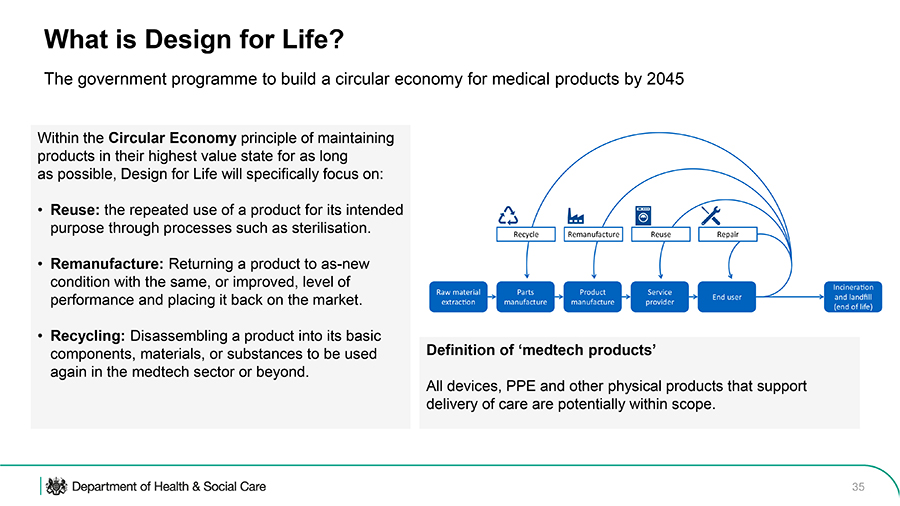
Josh highlighted how the programme’s goals are interlinked. Reusable and remanufactured products not only deliver carbon savings of up to 56 percent but also provide significant cost reductions. Many NHS pilots have already demonstrated both financial and quality benefits. For industry, this shift opens up new opportunities in services like remanufacturing, sterile processing, and materials recovery – areas with real potential for economic growth.
The government’s wider commitment to a circular economy underpins the programme, aligning with DEFRA’s national strategy.
One standout example from recent Design for Life pilots was at Northampton General Hospital NHS Trust, which trialled a reusable patient warming device, typically used before and after surgery to prevent hypothermia. Previously, the trust disposed of around 4,000 single-use warming blankets annually at a cost of £28,000.
By switching to a reusable alternative, the trust saved £10,000 each year and reduced emissions by nearly two tonnes of CO₂. Beyond cost and carbon, the reusable product delivered quieter operating theatres and improved patient safety, thanks to a design that eliminated the need for glue to attach the blanket to the patient.
However, adoption was not without its challenges. Shifting to reusable systems required changes in decontamination protocols, staff training, and logistics – highlighting the importance of investment in infrastructure and behaviour change.
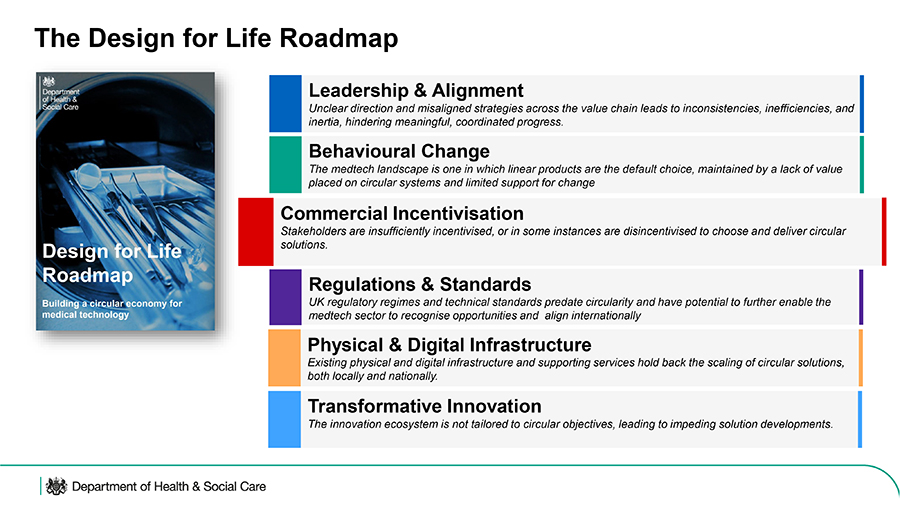
Josh outlined the programme’s roadmap for overcoming such barriers. These include:
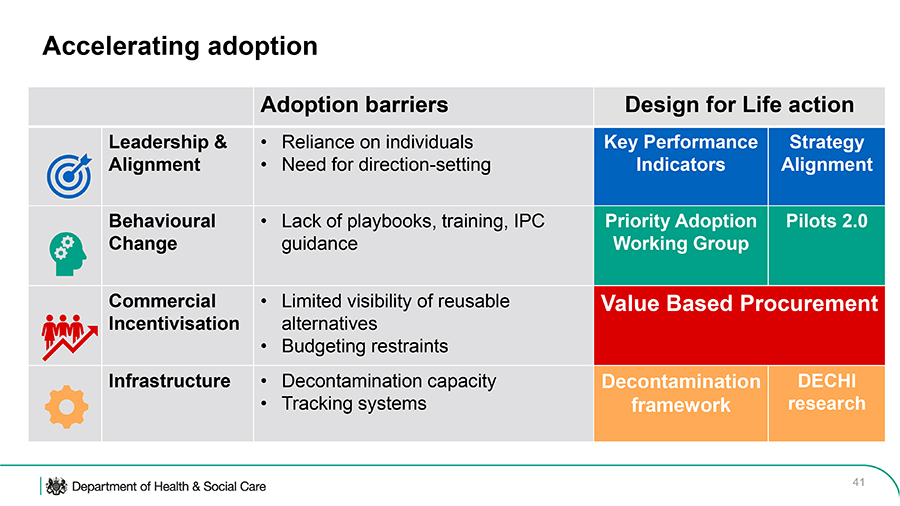
For BHTA members, the Design for Life programme presents a clear signal: the NHS is serious about sustainable procurement, and the system is evolving to support circular solutions. From value-based procurement to new service opportunities, the shift opens commercial pathways for companies ready to innovate.
Josh closed by urging medtech suppliers to engage early, collaborate with NHS partners, and align their products and services with circular principles.
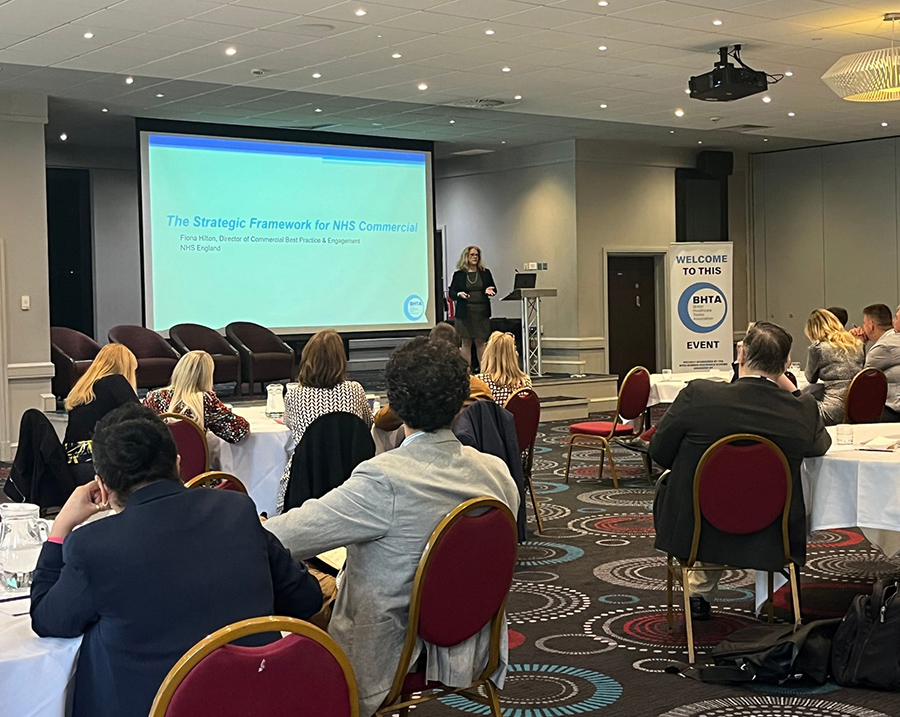
At the recent British Healthcare Trades Association (BHTA) Conference 2024, Fiona Hilton, Director of Commercial Best Practice & Engagement for NHS England, discussed The Procurement Act 2023 and the Strategic Framework for NHS Commercial.
The BHTA Conference 2024 focused on the UK healthtech landscape over the next five years. It was a chance for BHTA members to hear from senior government and NHS speakers about how the changes made today will impact the future of the health service.
Fiona highlighted the NHS Commercial portfolio and how it all links together. This revolves around four central initiatives: the NHS Central Commercial Function (CCF) service offers, the Commercial Efficiencies Programme, the Procurement Act, and the Strategic Framework for NHS Commercial. See the slide below for further details.
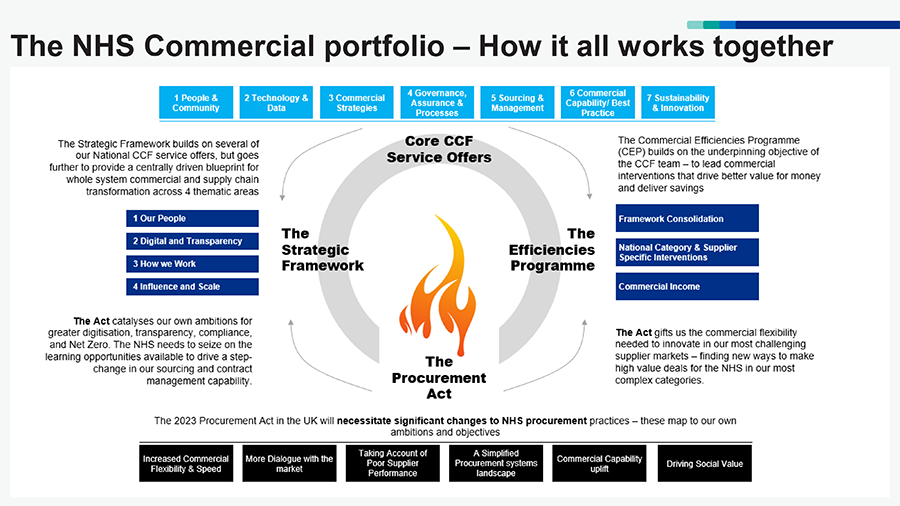
“We’re trying to link the NHS much more into how the whole of central commercial government works, so that we can collaborate and engage with some of the standard practices that are already in place,” Fiona said.
One key point from Fiona’s presentation is that healthcare procurement is set to transform in 2024 with the introduction of two new procurement regimes: the Procurement Act 2023 and the Provider Selection Regime (PSR).
Fiona emphasised that the NHS believes that the Procurement Act 2023 is key to transforming procurement in the medtech sector. The Act will go live on 28 October 2024.
“We believe that the Procurement Act is a fundamental catalyst to enable change,” added Fiona. “It’s really key for us to be able to establish what we want to do on innovation, working with SMEs, and enabling greater transparency with our suppliers.”
The Procurement Act 2023, she said, will introduce a new competitive and flexible procedure that will enable the NHS to work innovatively and faster with suppliers. It simplifies the regulations that govern public procurement and promises increased commercial flexibility.
Additionally, within the Act, the Competitive Flexible Procedure will allow contracting authorities to design processes that best suit their needs, rather than follow suboptimal standardised procedures.
Importantly, Fiona stressed that the Act will give the NHS an enhanced to take into account poor performance suppliers and the potential debarment of those that do not improve, which will help the NHS improve outcomes.
Additionally, Fiona encouraged medtech suppliers to become familiar with the PSR, which launched in January 2024. It represents a new set of rules governing healthcare services in England. The PSR exempts healthcare contracts from the formal public procurement regime. Fiona added that the regime enables a more flexible, proportionate process when awarding healthcare contracts.
Another important topic from the presentation was around the Strategic Framework for NHS Commercial, which aims to be globally renowned, supporting the delivery of the world-class Commercial Function in healthcare, in patient care, and in outcomes. See the slide below for more information.
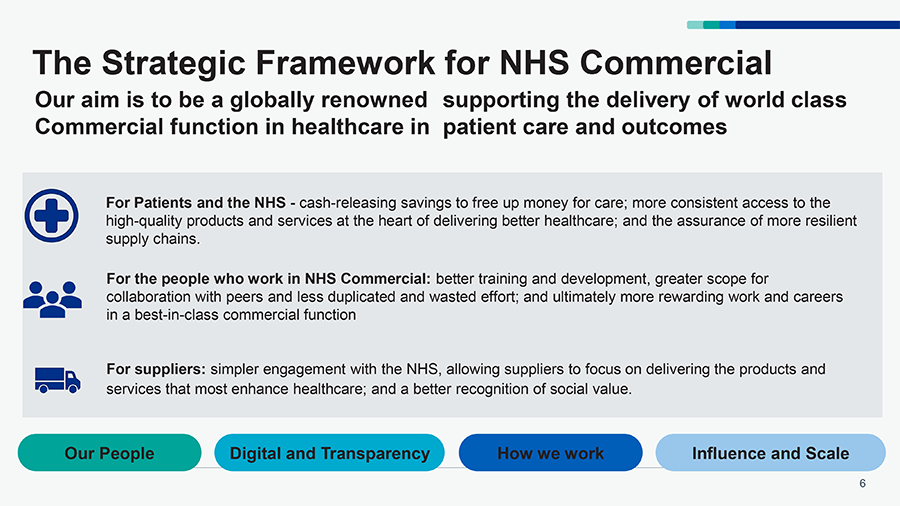
Fiona explained: “The Strategic Framework was put together originally in order to be able to support the whole of commercial healthcare for outcomes, not just about value for money upfront. It was about benefitting the whole of the life cycle, and the outcomes across all of commercial.”

The British Healthcare Trades Association (BHTA) recently hosted another successful conference that brought together healthcare leaders and suppliers to discuss how the changes made today will impact the future of the health service.
The sellout BHTA Conference 2024, ‘Health Tech in the UK: The next 5 years’, took place at the Northampton Town Centre Hotel on 21 May and was sponsored by Verlingue.
Boasting an impressive roster of key government and NHS speakers, engaging presentations throughout the day included topics on the MedTech Strategy one year on, the Procurement Act 2023, late-stage medical device assessments, practical export support for UK SMEs, UK medical device regulation changes, and much more.
Attendees had the chance to ask the speakers important questions during two Q&A panel discussions throughout the day.
The conference kicked off with a welcome from BHTA CEO David Stockdale, who highlighted some of the BHTA’s successful campaigns, how the BHTA lobbies to government to ensure its members’ voices are heard, and an overview of the BHTA Conference 2024.
Next, Lord Markham, Parliamentary Under-Secretary from the Department of Health and Social Care (DHSC), shared his opening remarks. Lord Markham outlined that the UK has massive potential to transform the medtech landscape over the next five years and highlighted relevant and successful government initiatives like Innovative Devices Access Pathway (IDAP), the MedTech Strategy, and late-stage medtech assessments.
David Lawson, Director of MedTech for DHSC, delivered a presentation titled ‘Value Not Cost’. He discussed the ‘The medical technology strategy: one year on’ report, the issues DHSC is trying to solve when it comes to the medtech sector, and value-based procurement.
Fiona Hilton, Director of Commercial Best Practice & Engagement for NHS England, discussed the Strategic Framework for NHS Commercial. Her presentation delved into how the Procurement Act 2023 will significantly change how the NHS works with suppliers and the Strategic Framework for NHS Commercial.
Andrew New, CEO of NHS Supply Chain, presented ‘One Year On – More to Come’. He talked about how NHS Supply Chain will change over the next five years to make it better to work with, and how it aims to enable an optimised, resilient, and sustainable supply chain.
Mark Chapman, Interim Director Medical Technology Digital & Diagnostics at NICE, commenced the afternoon presentations. His presentation was titled ‘NICE HealthTech Assessment: Focus on What Matters Most’. Mark explained the NICE HealthTech Assessment lifecycle approach and late-stage medical device assessments.
Barney Willis, Deputy Head of Life Sciences for the Department for Business and Trade (DBT), explained how DBT provides practical support to UK medtech SMEs with exporting. Barney provided an insight into how DBT promotes innovative UK medtech companies in key global export markets.
Before the closing remarks, Laura Squire, Chief Healthcare Quality & Access Officer at Medicines and Healthcare products Regulatory Agency (MHRA), delivered the final BHTA Conference 2024 presentation. Her talk, ‘How Regulation of Medical Devices in the UK is Changing’ explored where UK medical device regulation is at now and what the future looks like, alongside international recognition of medical devices.
Positive feedback from the day included:
“An excellent set of speakers and some thought-provoking questions. Given the make-up of BHTA membership, it was good to see several references to the importance of SME business from the speakers.”
“A very good event with really good Q&A sessions. The speakers and the topics they covered should have been of real value to members. I always go looking for 3 or 4 golden nuggets at a day like this, and there were several.”
“It was a really informative day, great speakers, content, location, room, and lunch.”
“It was obvious from how well it went that a lot of work has gone into it, so I hope all the team involved are justifiably proud of the day.”
This consultation sought views on proposals to develop a more integrated, rules-based and predictable pathway for the evaluation, funding and commissioning of medical technologies in the NHS. The proposed pathway aimed to cover the full lifecycle of medtech, from early innovation through to routine adoption, with a focus on improving patient outcomes and delivering better value for the NHS.
For BHTA members, the proposals signalled a move towards clearer and more structured market access processes, with a stronger role for NICE in linking clinical and cost-effectiveness assessments to funding decisions. The approach aimed to provide greater certainty for innovators and suppliers, while supporting faster and more consistent adoption of effective technologies.
The consultation formed part of the wider Medtech Strategy and broader NHS reforms, with an emphasis on reducing complexity, supporting innovation and enabling more value-driven decision-making. The BHTA encouraged members to consider the potential implications for evidence generation, market access and adoption.
Download the relevant documents:
Click HERE to download the consultation document.
Click HERE to download the BHTA response to this consultation.