
- Back
- Back
- Back
- Back
- Back
- Back
- Back
- Back
- Back
- Back
The Health Bill completed its House of Commons stages on 8 September, following two days of Report Stage debate covering medical device regulation, NHS structures, procurement, commissioning, community services, and social care.
During the 7 September debate, MPs considered NHS procurement, integrated care boards (ICBs), community equipment, and wheelchair services. The 8 September debate brought further developments, including new provisions covering medical device regulation.
Several developments across the two days are particularly relevant to BHTA members.
One of the most significant changes came on 8 September, when MPs agreed New Clause 94, tabled by the UK Government, establishing the statutory foundation for a future medical device licensing regime in Great Britain.
The new powers would allow regulations to require product licences for supplying or advertising medical devices, alongside personal licences for activities including manufacturing, importing, wholesale dealing, and conducting clinical investigations. Regulations could also cover licence conditions, safety and performance monitoring, enforcement, exemptions, and a public register.
Minister for Secondary Care Karin Smyth MP said the framework is intended to replace the current regulatory regime in Great Britain, with the detail to be developed through regulations in consultation with patients, healthcare professionals, and the medical device sector.
The provisions apply to Great Britain, while EU medical device legislation will continue to apply in Northern Ireland under the Windsor Framework.
MPs also agreed New Clause 98, providing a clearer legal framework for sharing medical device information with UK health systems, organisations, and trusted international partners.
Community equipment and wheelchair provision received detailed attention on 7 September.
Daniel Francis MP, Chair of the All-Party Parliamentary Group for Wheelchair Users and the All-Party Parliamentary Group for Access to Disability Equipment, spoke in support of Amendment 32 and New Clause 39. These proposed an 18-week timeframe for providing community equipment and wheelchair services, alongside published local standards and annual reporting by ICBs.
Daniel highlighted evidence gathered for an inquiry by the APPG for Access to Disability Equipment last year. One in three equipment users who responded reported waiting a significant amount of time for equipment, while one in five had waited more than two months. He also said 74 percent of responding professionals and equipment providers had seen hospital discharge delayed because essential equipment was unavailable in a person’s home.
Daniel highlighted local variation, describing pupils attending the same school and living within the same ICB area receiving different wheelchair service standards because they lived in neighbouring boroughs.
For the purposes of the proposals, community equipment was defined broadly to include products and adaptations such as wheelchairs, specialist seating, hoists, hospital beds, pressure-relieving equipment, and home adaptations.
Neither proposal was agreed as an amendment to the Bill, although Karin said she would write to Daniel about the government’s plans for ICBs to improve the situation.
Karin said the Chancellor had asked the Health Secretary to consider how NHS procurement could better support British industry. The Health Secretary has commissioned a review of strategic procurement pipelines to identify opportunities for a new social value model supporting British jobs, skills, and innovation.
For BHTA members supplying the NHS, the development of this model could influence how social value, domestic economic contribution, skills, and innovation are considered in future procurement.
The abolition of NHS England (NHSE) is a central part of the Bill, with its functions due to transfer elsewhere in the health system, including to the Department of Health and Social Care.
MPs scrutinised how that transition would work in practice. Proposals included a transition strategy to protect NHSE’s expertise and organisational knowledge, an assessment of the costs and savings of abolition, and a health and social care integration plan addressing joint commissioning, delayed hospital discharge, and additional responsibilities for ICBs.
Social care proposals included New Clause 63, which called for government plans covering respite care, Carer’s Allowance, free personal care, and a cap on care costs. These proposals were not incorporated into the Bill.
There was, however, an agreed change affecting ICB governance. Government amendments retained a requirement for each ICB to include at least one member jointly nominated by local authorities in its area, alongside a member nominated by a mayoral strategic authority.
Danny Beales MP welcomed the change and raised the broader question of which functions should remain nationally organised and which should be devolved to ICBs following the abolition of NHSE. He highlighted the benefits of national commissioning where consistent standards and delivery at scale are required.
For BHTA members, the eventual division of responsibilities could affect how products and services are commissioned, and whether suppliers engage with national bodies, individual ICBs, or other parts of the health system.
The Health Bill passed its Commons Third Reading on 8 September and received its formal First Reading in the House of Lords on 9 September. Its Lords Second Reading is scheduled for 13 October, before detailed scrutiny begins.
For BHTA members, key areas to follow include medical device licensing, NHS procurement and social value, the transfer of NHSE’s functions, ICB responsibilities, and community equipment and wheelchair provision.
BHTA will continue to monitor the Bill as it progresses through Parliament and provide updates on developments affecting members.
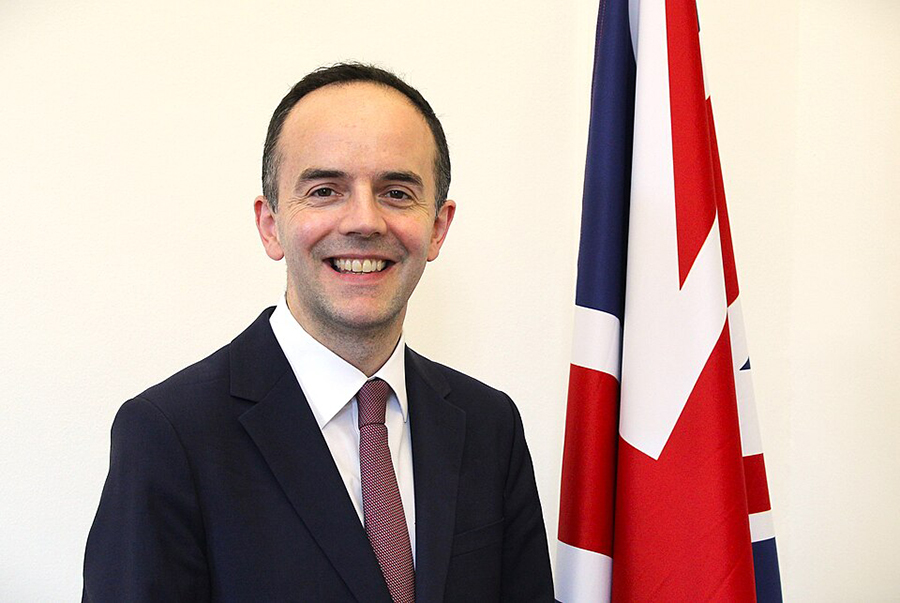
The Rt Hon James Murray MP has been appointed Secretary of State for Health and Social Care following the resignation of The Rt Hon Wes Streeting MP from government.
The appointment was approved by The King on 14 May 2026, with James Murray taking over responsibility for the Department of Health and Social Care (DHSC), including oversight of NHS delivery and performance, as well as social care policy.
James Murray has served as the Member of Parliament for Ealing North since 2019. Prior to his appointment to DHSC, he served as Chief Secretary to the Treasury from September 2025 and previously held the role of Exchequer Secretary to the Treasury. Before entering Parliament, he served as Deputy Mayor of London for Housing and Residential Development between 2016 and 2019, following a decade as a local councillor in London.
Wes Streeting confirmed his resignation in a letter to Prime Minister Sir Keir Starmer, stating that he had “lost confidence” in the Prime Minister’s leadership following recent political developments and local election results. An exchange of letters between the Prime Minister and Wes Streeting was subsequently published by the government.
In his resignation letter, Wes Streeting reflected on NHS performance during his tenure, pointing to reductions in waiting lists, improvements in ambulance response times, and increased NHS productivity. He also referenced broader political disagreements within government and concerns over Labour’s future direction, including the scale of recent local election losses and the wider political challenges facing the government.
Responding to the resignation, Prime Minister Sir Keir Starmer thanked Wes Streeting for his service and described his contribution to NHS reform as significant. In his reply, the Prime Minister highlighted progress including reduced waiting lists, improvements in patient experience, and ongoing policy initiatives such as the 10 Year Health Plan, the National Cancer Plan, and reforms to adult social care.
The Prime Minister also acknowledged the political challenges facing the government following recent local election results, while expressing hope that Wes Streeting would continue to play an important role within the Labour Party in future.
James Murray now assumes leadership of DHSC at a time of continued focus on NHS recovery, social care reform, workforce pressures, and wider healthcare policy development across the UK.
Reacting to the announcement of the new Secretary of State for Health and Social Care, David Stockdale, Chief Executive of the BHTA, said: “We congratulate James Murray MP on his appointment as Secretary of State for Health and Social Care at a pivotal time for the sector.
“With major structural changes ahead, including the proposed bill to abolish NHS England outlined in the King’s Speech 2026, alongside ongoing concerns around social care, wheelchair services, and community equipment provision, the BHTA looks forward to working constructively with the new Secretary of State to help improve timely access to the right equipment and support for people across the UK.
“We also hope to continue engaging with government on long-standing sector priorities, including the BHTA’s campaign to remove VAT on life-saving public access defibrillators.”
The UK Government has published the King’s Speech 2026, setting out its proposed legislative programme for the next parliamentary session.
Several proposed bills could affect BHTA members, including measures on NHS reform, patient data, cyber security, late payments, competition, and steel supply chains.
One of the most significant announcements for the healthcare sector is the NHS Modernisation Bill, which will abolish NHS England by transferring its functions into the Department of Health and Social Care or the wider system. The bill will also enable a Single Patient Record, allowing people to view their health and social care records securely on the NHS App. This may be relevant to members working in digital health, data, interoperability, or services that may link to the NHS App in future. Members can read the BHTA’s position on the abolition of NHS England for further context.
The Cyber Security and Resilience Bill would require organisations providing essential services to report more harmful cyber incidents to their regulator and the National Cyber Security Centre within 24 hours, followed by a full report within 72 hours. It would also introduce tougher enforcement, including turnover-based penalties for serious breaches.
The National Security Bill would update the Computer Misuse Act 1990 and create a Cyber Crime Risk Order. This may affect how cyber risks are investigated, prevented, and managed across digital systems and services.
For businesses, the Small Business Protections (Late Payments) Bill would introduce measures to tackle late payments between businesses. These include maximum payment terms of 60 days, mandatory interest on late payments at eight percent above the Bank of England base rate, and new powers for the Small Business Commissioner to investigate poor payment practices, adjudicate disputes, and fine businesses that fail to comply.
The Competition Reform Bill could affect members where competition enforcement, market reviews, or merger activity shape healthcare and assistive technology markets. It would give the CMA Board a role in decisions on mergers and market investigations, aiming to make decision-making more consistent, predictable, and accountable.
The Steel Industry (Nationalisation) Bill provides a route for the government to nationalise steel companies or their operations, provided the public interest test in the legislation is met. The announcement follows wider government measures on steel, including changes due to come into effect from 1 July 2026 that will reduce tariff-free import quotas and introduce a 50 percent tariff on steel imports above these limits. This is relevant to members that manufacture with raw steel or rely on steel as a significant input cost, as the changes could affect costs, availability, procurement decisions, and manufacturing strategies.
The BHTA will continue to monitor the proposed legislation and assess the implications for members as the bills progress through Parliament.
The BHTA is hosting a free webinar at 2pm on 21 May 2026 to examine the current policy and political landscape. It will cover the key announcements from the King’s Speech 2026 and the outcome of the May elections, with a focus on what these developments mean for BHTA members.
On 13 March 2025, Prime Minister, Keir Starmer, announced that NHS England (NHSE) will be formally abolished.
Health and Social Care Secretary, Wes Streeting, confirmed that NHSE will be brought into the Department of Health and Social Care (DHSC) entirely over the next two years.
It is a decision that is supposed to avoid excessive duplication and inefficiencies between NHSE and DHSC. This major reform is also designed to cut bureaucracy, free up capacity, and deliver savings of hundreds of millions of pounds a year, according to the government.
The abolition of NHSE will be phased over the next two years, during which time it will take on a new and more focused role. Under the leadership of the recently announced NHSE executive team, during this transition period, it will:
The government has made clear that local NHS providers and integrated care systems (ICSs) will have more autonomy, with NHSE stepping back from detailed operational oversight. Waiting time targets and financial frameworks will remain but with greater flexibility for local leaders to decide how to meet them.
Of the combined 17,900 workforce across both NHSE and DHSC, it is expected around 9,000 will go, which means the new and clearly more powerful DHSC team will have around 9,000 staff.
While the political message is clear, the legal process is more complicated. The 2012 Health and Social Care Act legally enshrined NHS England’s independence, meaning that some legislative change will be needed to fully dissolve its infrastructure. However, Wes Streeting has confirmed that much of the change can be delivered without the need for primary legislation, stressing that “time is of a premium” and that the government will “immediately work forward” to begin the transition.
While some aspects of NHSE’s absorption into the DHSC can be enacted through secondary legislation and administrative restructuring, there will still be a need for primary legislative change at some stage. The government is working with the Leader of the House to secure an appropriate timetable, ensuring that the necessary legal adjustments are made without derailing other parliamentary priorities.
It is not yet clear what the procurement landscape will look like with NHSE’s abolishment.
“[DHSC] is tasked with realising the untapped potential of our National Health Service as a single-payer public service, getting a better deal for taxpayers through central procurement, being a better customer to medical technology innovators to get the latest cutting-edge tech into the hands of staff and patients much faster, and being a better partner to the life sciences sector to develop the medicines of the future.”
Wes Streeting
However, NHS Supply Chain, which currently reports to NHSE, is responsible for centralised procurement of products and services into the NHS, which leads to uncertainly around which body will be responsible for procurement going forwards and how centralised procurement may change.
Likewise, it is not yet clear what will happen to the NHS Central Commercial Function (CCF), which owns Sustainability and Social Value, Med Tech Stakeholder Management, and Value-Based Procurement (partially).
For BHTA members, navigating any changes to procurement could be complicated, time-consuming, and challenging. We urge the government to ensure any changes are communicated clearly and with as much time as possible, straightforward, consistent, and as seamless as possible to minimise disruption to vital healthcare services.
The MedTech Directorate is set to become more powerful over these next two years, with around 7,000 new staff transitioning in from NHSE. Tasked with building a thriving UK MedTech sector, the body’s remit covers reviewing how medical devices are regulated, commissioned, and used on an ongoing basis.
The current MedTech Directorate Director, David Lawson, who came into post in 2022 will, the BHTA believes, have a much wider portfolio of responsibilities and will need a larger management structure to manage the various pillars of activities. There will now be a direct line from the centre to the ICSs so the pace change will be enhanced and as stated by the Secretary of State, ICSs will have more autonomy.
Any changes to the governance and restructuring of the MedTech Directorate will likely impact BHTA members, who may be subject to new processes. Again, we urge the government to ensure any changes are communicated clearly and with as much time as possible, straightforward, and as seamless as possible to minimise disruption to vital services.
Off the back of NHS England being abolished, here are the key questions that the BHTA, BHTA members, and the industry more broadly need answers for: