
- Back
- Back
- Back
- Back
- Back
- Back
- Back
- Back
- Back
- Back

The UK Government has published its ‘Rewiring the State’ policy paper, setting out plans to reshape the structure of central government while devolving more decision-making to regional and local leaders. The reforms, which will be introduced over the course of this Parliament, are intended to create what the government describes as a stronger strategic centre while giving greater responsibility to local institutions for driving economic growth and public service delivery.
The proposals form part of the government’s wider ambition to devolve more decision making from central government to regional and local institutions. For organisations working across the health and care sector, the reforms could have important implications for how services are planned, funded, and influenced in the years ahead.
Among the headline changes is the creation of No.10 North, which the government describes as the new “engine room” for devolution and local economic growth. A new Office for the Prime Minister and Cabinet (OPMC) will also bring together No.10, No.10 North, and core Cabinet Office functions supporting the Prime Minister and Cabinet.
Meanwhile, the Department for Business and Trade will be renamed the Department for Business, Innovation, Science and Trade (DBIST), with responsibility for science and innovation moving into the department. The existing Department for Science, Innovation and Technology (DSIT) will be dissolved, with its responsibilities redistributed across government to better align technology and innovation with wider economic and public service priorities.
For the health and care sector, the policy paper places significant emphasis on further devolution and place-based decision making. Central to these proposals is the government’s ambition to establish strategic authorities across England. These regional bodies are intended to make it easier to devolve powers from Westminster while bringing together responsibilities across areas including transport, housing, skills, economic development, health, wellbeing, and public service reform. They will complement, rather than replace, existing local councils.
As part of these reforms, Integrated Care Boards (ICBs) will be aligned with the boundaries of strategic authorities by the end of this Parliament. Where there are strong financial, strategic, or operational reasons, ICBs may instead align with the boundaries of multiple strategic authorities. The government says this will better align NHS planning with wider regional priorities and support more joined-up public service delivery.
The proposals also include greater alignment and pooling of funding for preventative services, with funding devolved, where possible, to enable strategic authorities and constituent local authorities to invest jointly in local priorities while continuing to meet national standards.
The policy paper also signals a change in how the government intends to develop policy. It proposes replacing the current model of “consultation by default” with new approaches to public participation, including reviewing where statutory consultation requirements could be removed and placing greater emphasis on engagement through local leaders and communities.
For organisations that routinely contribute to government consultations, these proposals could represent a significant change in how policy is influenced. While further detail is expected, businesses may increasingly need to engage through new forms of public participation, stronger relationships with regional and local leaders, and trade associations as routes for engaging with government, rather than relying solely on formal consultation exercises.
Looking ahead, the government has confirmed that, alongside this autumn’s Budget and fiscal devolution roadmap, it will publish a whitepaper setting out the full programme of reforms, including legislation, the alignment of public service boundaries, the transfer of additional powers and functions, and a timetable for implementation developed in partnership with mayors and local leaders. The whitepaper is expected to provide greater detail on how these reforms will be implemented and what they will mean for organisations operating across the health and care sector.
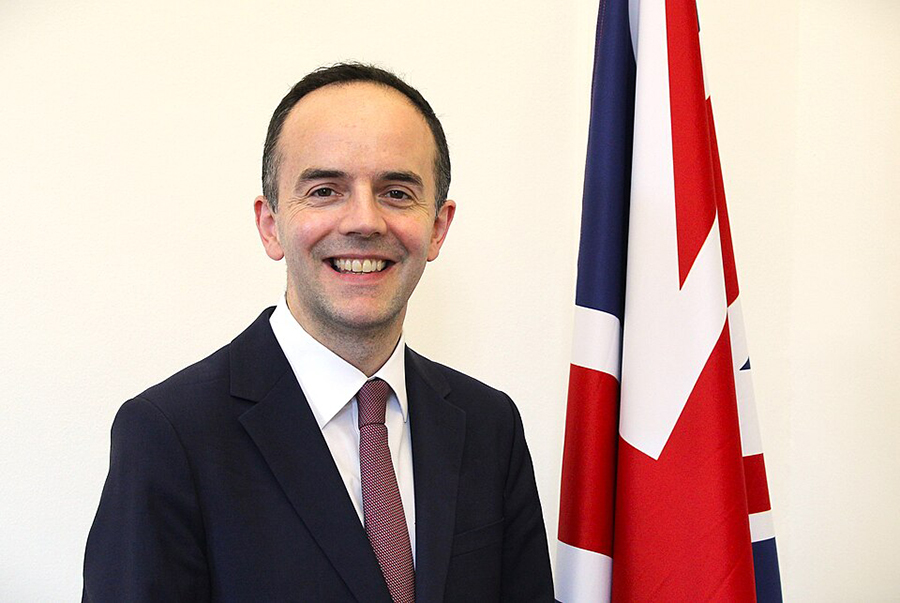
The Rt Hon James Murray MP has been appointed Secretary of State for Health and Social Care following the resignation of The Rt Hon Wes Streeting MP from government.
The appointment was approved by The King on 14 May 2026, with James Murray taking over responsibility for the Department of Health and Social Care (DHSC), including oversight of NHS delivery and performance, as well as social care policy.
James Murray has served as the Member of Parliament for Ealing North since 2019. Prior to his appointment to DHSC, he served as Chief Secretary to the Treasury from September 2025 and previously held the role of Exchequer Secretary to the Treasury. Before entering Parliament, he served as Deputy Mayor of London for Housing and Residential Development between 2016 and 2019, following a decade as a local councillor in London.
Wes Streeting confirmed his resignation in a letter to Prime Minister Sir Keir Starmer, stating that he had “lost confidence” in the Prime Minister’s leadership following recent political developments and local election results. An exchange of letters between the Prime Minister and Wes Streeting was subsequently published by the government.
In his resignation letter, Wes Streeting reflected on NHS performance during his tenure, pointing to reductions in waiting lists, improvements in ambulance response times, and increased NHS productivity. He also referenced broader political disagreements within government and concerns over Labour’s future direction, including the scale of recent local election losses and the wider political challenges facing the government.
Responding to the resignation, Prime Minister Sir Keir Starmer thanked Wes Streeting for his service and described his contribution to NHS reform as significant. In his reply, the Prime Minister highlighted progress including reduced waiting lists, improvements in patient experience, and ongoing policy initiatives such as the 10 Year Health Plan, the National Cancer Plan, and reforms to adult social care.
The Prime Minister also acknowledged the political challenges facing the government following recent local election results, while expressing hope that Wes Streeting would continue to play an important role within the Labour Party in future.
James Murray now assumes leadership of DHSC at a time of continued focus on NHS recovery, social care reform, workforce pressures, and wider healthcare policy development across the UK.
Reacting to the announcement of the new Secretary of State for Health and Social Care, David Stockdale, Chief Executive of the BHTA, said: “We congratulate James Murray MP on his appointment as Secretary of State for Health and Social Care at a pivotal time for the sector.
“With major structural changes ahead, including the proposed bill to abolish NHS England outlined in the King’s Speech 2026, alongside ongoing concerns around social care, wheelchair services, and community equipment provision, the BHTA looks forward to working constructively with the new Secretary of State to help improve timely access to the right equipment and support for people across the UK.
“We also hope to continue engaging with government on long-standing sector priorities, including the BHTA’s campaign to remove VAT on life-saving public access defibrillators.”