- Back
- Back
- Back
- Back
- Back
- Back
- Back
- Back
- Back
- Back
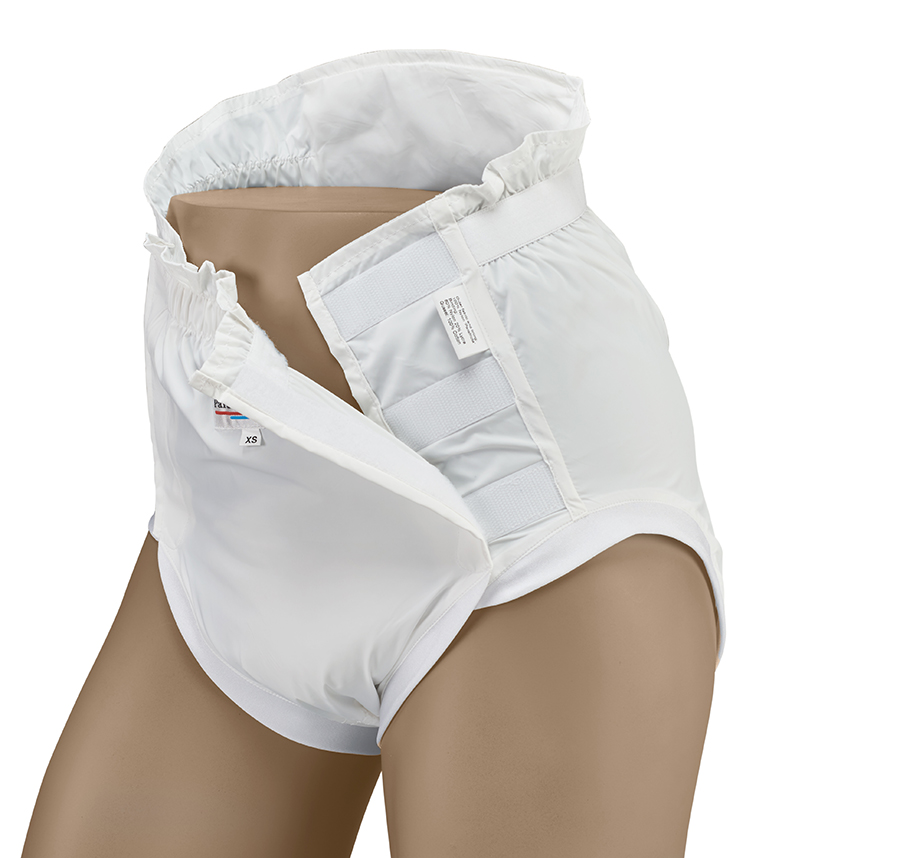

The British Healthcare Trades Association (BHTA) has welcomed APA Parafricta as a new member, which manufactures garments and bedding to prevent pressure injuries.
The BHTA recently caught up with Claire Cotes, Managing Director at APA Parafricta, to learn more about how the firm’s patented low-friction garments and bedding prevent pressure injuries and how BHTA membership offers valuable advice and guidance on challenges such as net zero compliance and the Drug Tariff Renewal process.
Claire originally qualified as a chartered management accountant while working at Black and Decker, after completing a business studies degree in Newcastle. After having children, she worked part-time as the office manager for a local builder and then ran her own catering business.
This background in finance and business led to Claire joining APA Parafricta in January 2020, during covid. She became Managing Director in 2022.
“Working in the healthcare industry has certainly reassured me I didn’t miss my calling as a nurse, and I have nothing but admiration for anyone working in a clinical role,” she added.
Claire explained that while most people would, unsurprisingly, assume that pressure ulcers are caused solely by pressure, friction and the associated shearing is actually a big part of the process.
As a manufacturer of garments and bedding to prevent pressure injuries, Claire said that APA Parafricta is the only company to focus on this.
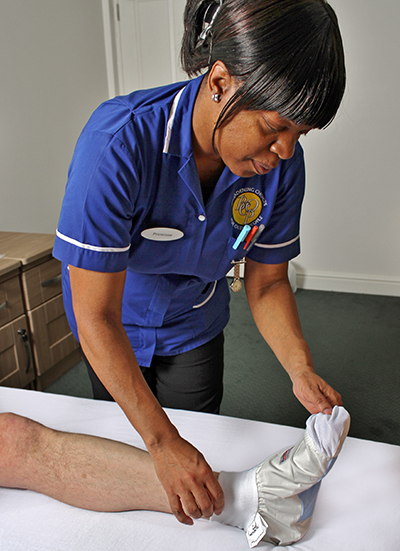
“We developed and patented our unique low-friction fabric, and this is the main component in all of our undergarments, bootees, and bed sheets. We have hospitals who have used the bootees for over 10 years and have never had a hospital acquired heel pressure ulcer whilst using them, so we know they work!”
Claire also commented that she has spoken to tissue viability nurses who have remarked that using APA Parafricta’s undergarments have “literally changed their wheelchair users’ lives” by stopping recurrent pressure ulcers.
“It’s hugely satisfying to know that our products actually make such a difference,” continued Claire. “The products are washable and reusable and are available on FP10.”
Claire noted some of the difficulties around net zero demands and carbon reduction plans for SMEs and how the BHTA can support in these areas.
She explained: “Demands for net zero and carbon reduction plans are constantly looming, and the expectation seems to be to spend thousands on consultancy, despite the NHS claiming to be SME-friendly. I’m very aware of “not knowing what I don’t know” so I hope the BHTA will be useful for that.”
Claire added that BHTA membership was recommended to her by an associate for the purpose of expert guidance through the new Drug Tariff Renewal process.
“When trying to achieve adoption into new hospital trusts, “not invented here syndrome” is a recurring issue, which I know other companies face, and we certainly can’t overcome that issue alone,” Claire added.
Looking ahead, APA Parafricta is looking forward to all of the events arranged for Stop the Pressure week (17-21 November 2025). In addition, Claire said that the company is constantly exploring ways to improve its products and make them relevant to a wider audience.
To find out more about how the BHTA can support your business and how to become a BHTA member, visit this page.
The British Healthcare Trades Association (BHTA) has teamed up with the Society of Tissue Viability (SoTV) to create a webinar and three articles on various important pressure care and beds and mattresses topics.
BHTA’s Beds and Support Surfaces and Pressure Care and Seating Sections worked with SoTV to create these assets on the beds and mattresses standards landscape, making it easier to understand what is essential and how to apply the standards in practice.
The webinar, titled ‘Pressure ulcer treatment vs fire risk: A case discussion’, discussed the risk of a catastrophic fire when using powered mattresses and actions that can be taken to mitigate the risk.
It is aimed at clinicians involved in the care of patients who smoke and require equipment for pressure relief. It is also suitable for people involved in procurement.
Speakers include:
The webinar covered the adverse outcomes associated with the development of a Category 4 pressure ulcer; the human factors that must be considered prior to providing a powered mattress to people who smoke; and potential intervention strategies and their effectiveness in minimising the risks associated with accidental dwelling fires.
In addition, the session looked at the role of individuals and agencies that are in contact with people at risk and how they can be employed to reduce the risk from fire. It also discussed national and international fire standards, and issues that need to be considered when procuring beds, mattresses, and cushions.
Watch the webinar below.
The three co-produced articles were written by Dr Barend ter Haar and Jeannie Donnelly.
First, ‘Understanding Standards for Beds and Mattresses: Whose job is it anyway?’, discusses the story of a contract adjudication group who were asked by the tender management team if the standards cited in a bed and mattress contract were correct/up to date.
The article discusses why understanding standards matters; which standards to use; where to find support in SoTV and the BHTA’s series of bite-sized Beds and Support Surfaces and Pressure Care and Seating articles; an introduction to the BS EN ISO 20342 series of mattress and overlays standards; and a note on terminology.
Secondly, ‘Understanding Standards for Beds and Mattresses: Bed Rails and the Risk of Entrapment’ discusses incidents where elderly patients have died in hospital after becoming entrapped between side rails and their mattress.
The article covers learning from the analysis of accident data; the actions that were required to comply with the MHRA’s updated guidance on the management and safe use of bed rails; international standards for ‘assistive products’, medical beds, and mattresses; and references.
The final article, ‘Understanding Standards for Beds and Mattresses: Pressure Care Devices Flammability Safety Criteria’, takes a procurement perspective, with a focus on what should be specified within the description of the relevant flammability criteria for selection of a pressure care device.
It only covers pressure care devices which are referred to as “medical devices” since these are specifically excluded from UK fire regulations, whereas domestic beds, mattresses, and cushions fall under furnishings fire regulations. The article considers environmental inputs, product elements, and explains FDA: The standard is BS ISO 16840-15 plus Amd1.