- Back
- Back
- Back
- Back
- Back
- Back
- Back
- Back
- Back
- Back
Last Updated on 28/05/2025 by Sarah Sarsby
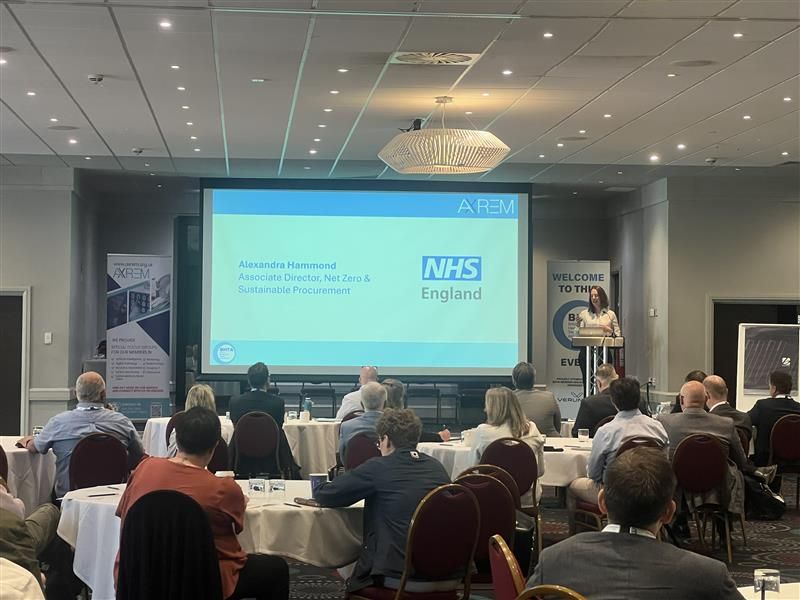
At ‘The Future of MedTech – Innovating for Tomorrow’ conference, Alexandra Hammond, Associate Director for Net Zero & Sustainable Procurement at NHS England, delivered the second part of a talk titled ‘Building a Sustainable Future through Responsible Procurement’.
Hosted by the British Healthcare Trades Association (BHTA) and AXREM, the conference took place on 13 May 2025 at The Mercure, Northampton.
The first part of the talk was delivered by Chris Taylor, Sustainability Lead UKI at Philips Health Systems.
Alexandra provided an in-depth look at how NHS England is embedding sustainability, social value, and modern slavery prevention into its procurement practices, all in support of the NHS’ broader net zero ambitions.
Alexandra began by highlighting that 66 percent of the NHS’ carbon footprint lies within its supply chain, positioning sustainable procurement as a powerful tool in the journey towards net zero. Her team’s mandate focuses on sustainable procurement and supply chains, while also driving social value and tackling modern slavery.
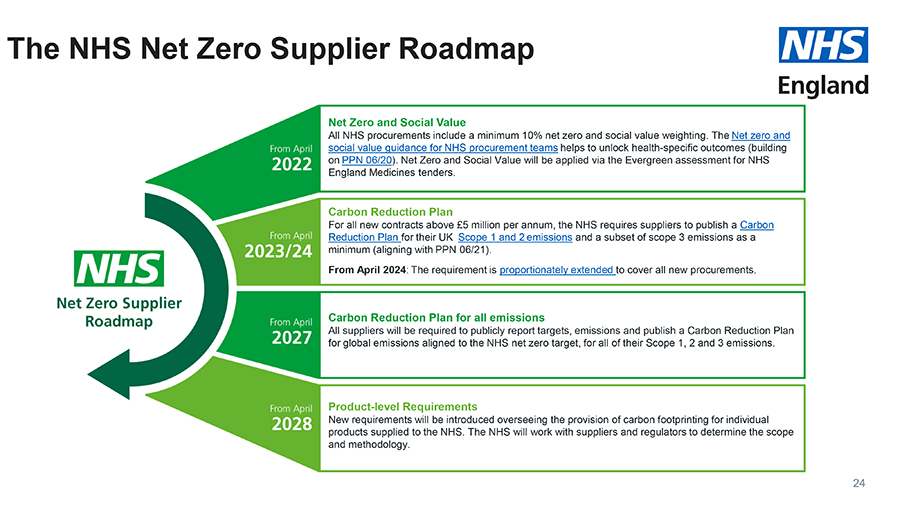
She reminded attendees of the NHS’ clear commitment: by the end of this decade, it will no longer work with suppliers who are not aligned with its net zero goals. To support this, the NHS Net Zero Supplier Roadmap lays out a series of milestones, several of which are already in place. These include embedding social value in all procurements and requiring suppliers to provide a carbon reduction plan.
From 2027, suppliers will be expected to expand the scope of their carbon reporting, with additional requirements on product-level emissions and disclosure coming in 2028. Alexandra emphasised that these future milestones are still in development and urged suppliers to take part in shaping the final policies.
A key enabler of the NHS’ sustainability work, Alexandra noted, is the National Procurement Policy Statement, published on 13 February 2025. This policy reinforces NHS England’s commitment to embedding net zero, social value, and ethical standards in procurement. Importantly, it aligns with wider government priorities for the public sector, including building an NHS for the future, kickstarting economic growth, and making the UK a clean energy superpower.
Alexandra explained that the statement is more than just guidance – it provides a formal basis for public sector organisations, including NHS bodies, to adopt procurement practices that reflect environmental and social priorities. It marks a shift from policy aspiration to concrete expectation.
Alexandra reassured suppliers that NHS England will take a proportionate, clear, and collaborative approach, with plenty of notice before implementing new policies. She noted that NHS England is listening closely to supplier feedback.
She also pointed to the NHS Evergreen Sustainable Supplier Assessment, hosted within the NHS Atamis e-procurement system, as a key tool for dialogue between the NHS and suppliers on sustainability. This tiered assessment enables suppliers to track and improve their maturity level on sustainability issues, without duplicating information across multiple systems.
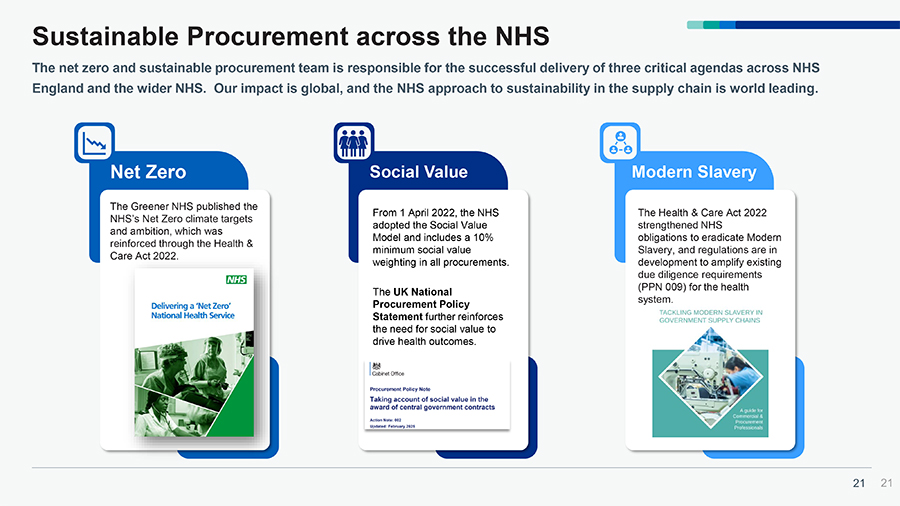
Beyond net zero, Alexandra spoke about the evolving expectations around social value. The government’s updated procurement priorities now include building a future-ready NHS, alongside themes such as clean energy, economic growth, and inclusion.
New regulations on modern slavery are also on the horizon, with NHS England working closely with the Department of Health and Social Care to ensure that supply chains are fair, ethical, and transparent. Procurement will play a central role in embedding these requirements across the health system.
For BHTA members, Alexandra’s message was one of opportunity and urgency. The NHS is committed to supporting suppliers, including SMEs, with tools, guidance, and access to events and on-demand resources such as emissions verification webinars and updates on science-based targets.
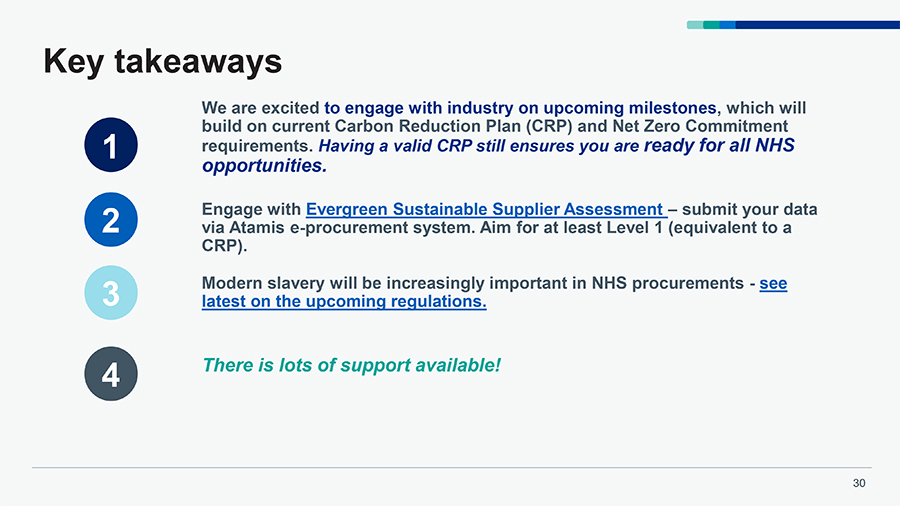
Alexandra concluded with a strong call to action for suppliers: engage with the NHS on these changes, make use of the Evergreen tool, and help co-design the future of sustainable procurement.