- Back
- Back
- Back
- Back
- Back
- Back
- Back
- Back
- Back
- Back
Last Updated on 09/06/2025 by Sarah Sarsby
Presented by Anastasia Chalkidou at ‘The Future of MedTech – Innovating for Tomorrow’, hosted by the British Healthcare Trades Association (BHTA) and AXREM on 13 May 2025 at The Mercure, Northampton.
Anastasia Chalkidou, Programme Director for Healthtech Guidance Delivery at NICE, delivered a clear message to delegates at this year’s BHTA and AXREM conference: medtech innovators now have more opportunities than ever to engage with NICE’s updated and more transparent evaluation processes.
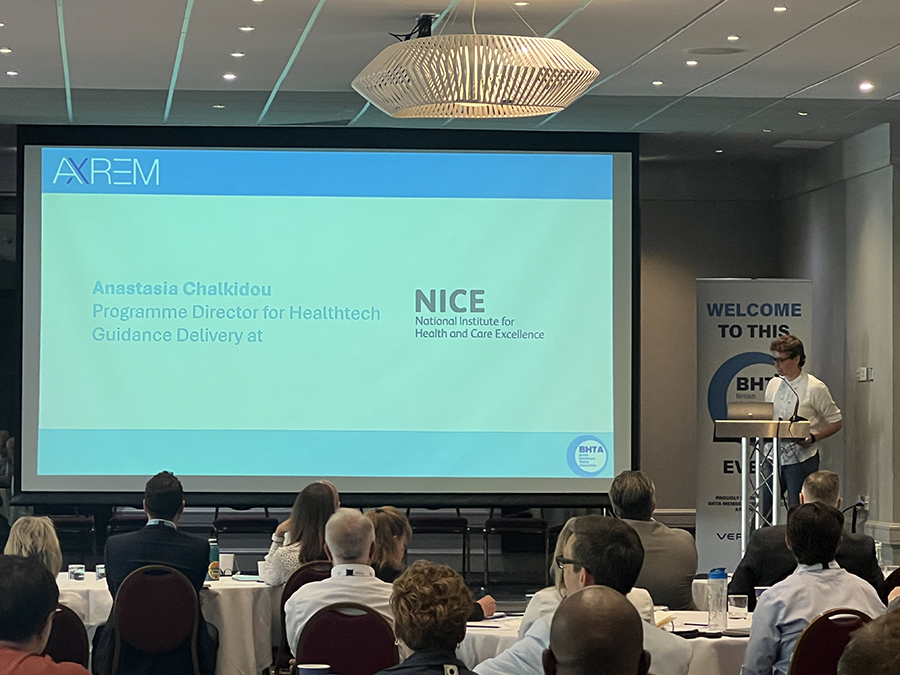
Speaking during the second part of an engaging talk titled ‘Regulation in the Medtech Sphere’, Anastasia provided a high-level overview of the organisation’s transformation and its implications for the healthtech industry.
The first part of the talk was delivered by Dr Rob Reid, Deputy Director of Innovative Devices at the MHRA, which focused on the upcoming UK medtech regulations.
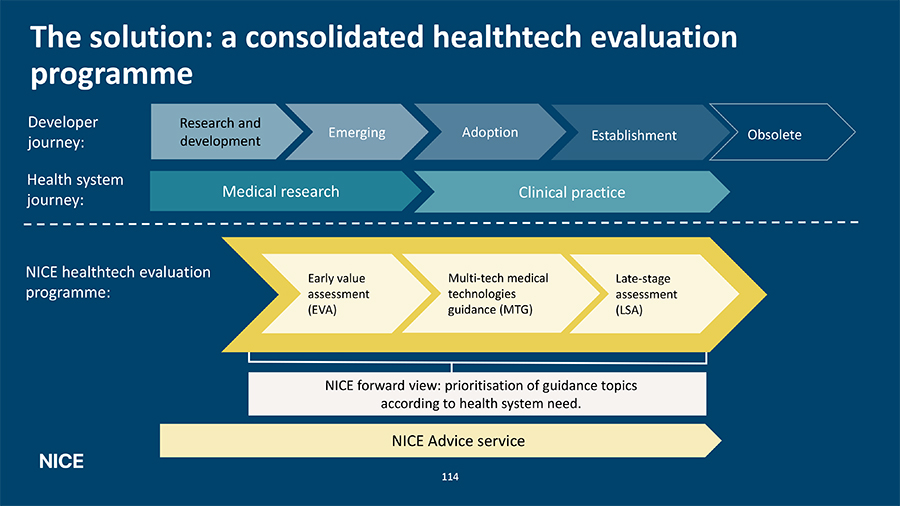
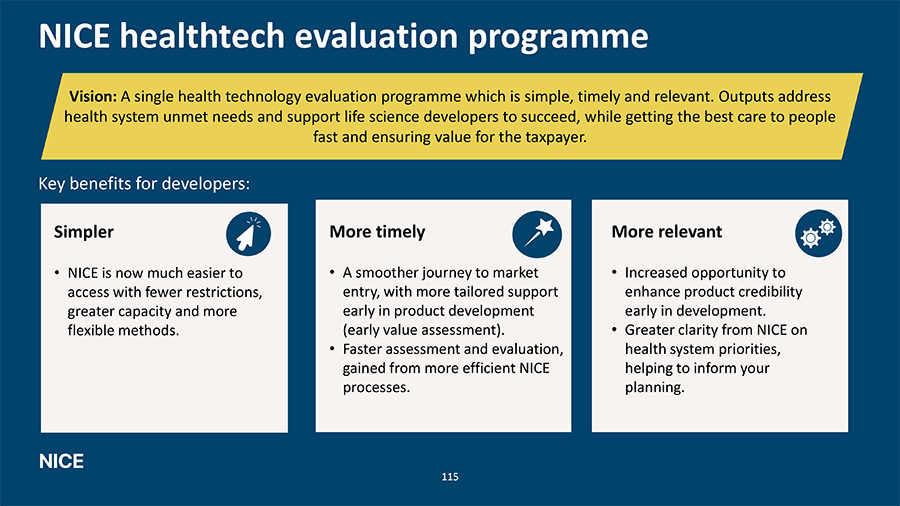
Over the past three years, NICE has undertaken a major transformation, which Anastasia explained is built on three core pillars: producing guidance that is more timely, more relevant, and has greater impact. For industry, this means a simplified and more accessible evaluation programme, with increased capacity and flexibility, and guidance that is better aligned with NHS system needs.
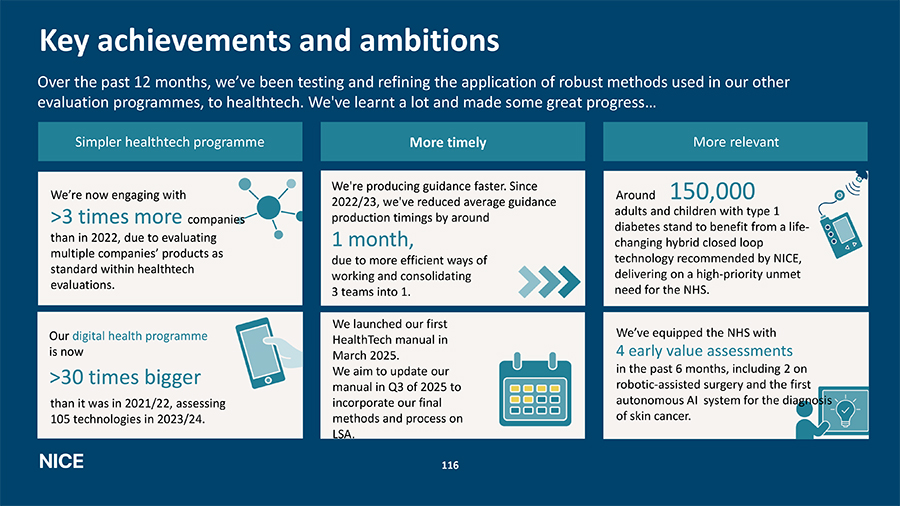
“We now have an early value assessment. That has become business as usual since last 12 months,” said Anastasia. This approach allows NICE to evaluate promising medtech, digital, AI, and diagnostic technologies sooner. These early assessments give conditional recommendations, provided there is a plan in place for further evidence generation, developed in partnership with stakeholders.
This marks a departure from the previous single technology evaluation model. With early value assessments, NICE is tackling the challenge of evaluating multiple products serving the same purpose. Now, NICE is able to make recommendations across groups of technologies, reflecting real-world usage and procurement within the NHS.
Another important development is NICE’s Prioritisation Board, which has now been operating for a year.
“It comes with a framework that explains in detail how we work on topic intel, the type of requirements that something needs to fulfil to be selected for evaluation with NICE,” explained Anastasia.
Decisions made by the board are publicly available and open to challenge, and NICE actively encourages input from clinicians and manufacturers to suggest technologies for evaluation as well as challenge certain decisions.
The HealthTech Evaluation Programme has seen notable growth. NICE’s digital health programme has also expanded significantly, with a threefold increase in evaluated products. NICE has also harmonised its processes with the publication of its unified healthtech manual, launched in March 2025, now moving into full implementation.
This harmonisation replaces fragmented and inconsistent evaluation methods with a single framework tailored to different types of technology. It promises more consistent timelines, enhanced support for evidence generation, and better alignment with wider NHS priorities. “It’s much easier now to access with fewer restrictions, greater capacity, and more flexible methods,” said Anastasia.
Beyond earlier and broader evaluations, NICE is piloting a late-stage assessment model. This focuses on high-spend, high-variation technologies already on the NHS procurement list, to determine whether pricing is justified and whether incremental innovation warrants broader adoption. This approach, said Anastasia, aims to ensure NICE “looks at incremental innovation and whether the price variation is justified”.
NICE’s transformation was shaped by early insights from the health system, which identified key needs: earlier signals of which technologies meet system priorities, more evaluations of digital solutions, and guidance on technologies already in market. NICE’s current programmes directly respond to these, providing earlier and more useful information for procurement, investment, and strategic decisions.
The message for industry is clear: whether a product is at the R&D stage or already in use, NICE now offers multiple routes for evaluation, conditional recommendation, and eventual system-wide adoption.
For BHTA members, NICE’s transformation presents a timely opportunity to engage with NICE earlier, more effectively, and with greater clarity on how products can achieve both recognition and adoption across the NHS.
See some of the slides from Anastasia’s presentation below: