- Back
- Back
- Back
- Back
- Back
- Back
- Back
- Back
- Back
- Back
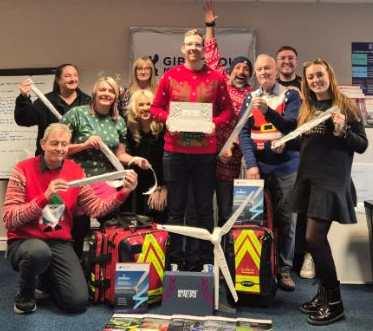
The British Healthcare Trades Association (BHTA) has welcomed Gibb Group as a new member.
Gibb Group provides medical service provision across multiple industries, operating in the UK and globally. The BHTA recently caught up with Karen Scott, Head of Clinical Services & Innovation at Gibb Group, to learn more about the organisation, its services, and the value of BHTA membership.
Gibb Group Medical & Rescue is part of a wider group called Gibb Group Limited, which is made up of four key divisions:
Gibb Group Medical & Rescue stives to keep people safe and operations running by delivering first-class turnkey solutions, with high-quality products and services.
Karen said: “Our ethos is built on safety, reliability, and innovation. We partner with leading organisations across energy, marine, and industrial sectors to deliver solutions that protect lives and enable operational success.”
Gibb Group works with airport and local authority fire and rescue services, and, since 2016, it has become one of the leaders in medical service provision for the renewable energy industry.
“Our market-leading EURIECA® programme of training, medical equipment, and clinical governance has been widely adopted in both onshore and offshore wind at home but also abroad in the US and Europe,” explained Karen. “We have ambitious plans to deliver the same services in the APAC region, where there is a growing wind energy market.”
Beyond its impact in the renewable energy industry, Gibb Group has also experienced major growth in its provision of offshore medics supporting wind farm organisations, where it deploys an experienced healthcare professional, complete with the equipment they require to do their role, to the point of injury.
Karen continued: “So we are the end users of a lot of the products we provide, as well!”
Founded in 2005 as Trauma & Resuscitation Services (Trauma Resus), the organisation began as a specialist provider of trauma training and clinical governance to the UK’s fire and rescue services.
In 2024, Trauma Resus was acquired by Gibb Group and now operates as its Medical & Rescue division. This acquisition enabled access to a broader global network, expanded training capability, and equipment supply across oil, gas, marine and renewable sectors.
Although the name has changed, the heart of the organisation remains the same, with the same people, principles and dedication to excellence.
Karen added: “Over two decades, we’ve built strong relationships with our customers, suppliers, and partners — and have been privileged to work alongside some of the most skilled and passionate professionals in the industry.”
One of the main reasons Gibb Group joined the BHTA was to access expert guidance on regulatory changes and product recalls, which can create uncertainty.
Membership also closely aligns with Gibb Group’s commitment to quality and professionalism.
Karen said: “It gives us a stronger voice in shaping industry standards and offers invaluable networking and knowledge-sharing opportunities.
“Being part of a larger association can strengthen our voice, but we are also hoping to bring our expertise and knowledge to the association as well and make a positive impact.”
Gibb Group prides itself on maintaining rigorous standards, reflected in its ISO accreditations and memberships of professional bodies.
Karen continued: “Additionally, our memberships in professional associations not only demonstrate our dedication to staying abreast of industry trends and best practices but also provide us with valuable networking opportunities and access to resources that further enhance our capabilities.
“These accreditations and memberships serve as a testament to our unwavering dedication to delivering the best services and products whilst upholding the highest standards of integrity and reliability, so BHTA was a natural alignment with our goals.”
Looking ahead, Gibb Group aims to continue expanding its Medical & Rescue offering in the UK and internationally. The company already operates across the UK, EU, USA, and APAC regions and is focused on growing its global customer base.
To support these ambitions, Gibb Group has recruited staff into international development roles.
Karen enthused: “We are excited to see where we are 12 months from now!”
To find out more about how the BHTA can support your business and how to become a BHTA member, visit this page.
The Robert Jones and Agnes Hunt Orthopaedic Hospital NHS Foundation Trust has published a new tender opportunity for the supply of orthotic products and associated services. This opportunity may be of interest to BHTA members supplying orthotic products, medical consumables, and related services to the NHS.
This tender opportunity relates to the supply of orthotic products and associated services for The Robert Jones and Agnes Hunt Orthopaedic Hospital NHS Foundation Trust.
The contract reference is C410670 and the estimated total value is £108,774 excluding VAT (£130,528.80 including VAT). The contract is expected to run for three years, from 1 March 2026 to 28 February 2029.
The opportunity is being run as a below-threshold open competition under the Procurement Act 2023. Awards will be made on the basis of best value for money.
To participate, suppliers are required to complete the relevant RFQ documentation as part of their submission.
The deadline for tender submissions is 12pm on 14 January 2026.
Tenders must be submitted electronically via the Atamis portal.
Members should ensure they allow sufficient time to access the documentation and submit all required information ahead of the deadline.
A new report, published today by the All-Party Parliamentary Group (APPG) for Access to Disability Equipment, reveals a national crisis in community equipment services.
The BHTA and Newlife, supported by Tendo, helped parliamentarians launch the APPG for Disability Equipment Access. The BHTA continues to support the APPG for Access to Disability Equipment.
The new report details findings from the APPG’s inquiry into community care equipment and barriers to access.
Community equipment provides children, adults, and elderly people with disabilities or temporary care needs with often vital equipment, such as harnesses, grabrails, and hoists. However, the report has found that almost three-quarters of people feel that systems providing community equipment is not meeting their needs.
According to the report, the crisis is leaving thousands of vulnerable people without the essential medical equipment they need to live safely and independently. The summer-long inquiry found the issue is systemic. The sector is unable to innovate and is held back by a creaking system, carers are unable to dedicate sufficient time towards patients, and patients themselves reporting the system simply does not work for them.
The report has found evidence of users waiting months and sometimes years for critical care assessments and access to critical medical equipment.
Entitled ‘Barriers to Accessing Lifesaving Disability Equipment’, the report found that:
Commenting on the report findings, David Stockdale, Chief Executive of the BHTA, said: “This report exposes the long-term, systemic challenges that those of us in the sector have been raising for years.
“The entire sector is committed to ensuring people have access to safe, high-quality equipment when they need it, but the lack of national oversight, inconsistent local commissioning, and insecure funding are undermining that goal.
“We urgently need a coordinated national approach that provides clear accountability, consistency across local areas, and robust, long-term investment. This report should serve as a catalyst for reform, ensuring the essential services that so many rely on are properly supported, resourced, and fit for the future.”
The APPG inquiry that fed into the report ran between July and September 2025. It has uncovered widespread evidence of systemic and in many cases unsafe delays.
The report found the crisis is in part caused by regional inequalities and the lack of national accountability, direction, and leadership. It concludes that long-term systemic fragmentation, underinvestment, and absence of political leadership are leaving vulnerable people and their families without the basic tools they need for dignity and independence.
To tackle the crisis, MPs on the APPG are calling on the UK Government to work with patients, carers, and industry to launch a dedicated strategy for community care equipment, overseen by a named Minister with clear responsibility for its delivery.
Launching the report in Parliament today, Daniel Francis MP, Chair of the APPG, said: “Across hundreds of testimonies, one message came through loud and clear: the system designed to support disabled children and adults is failing them. It is failing to deliver equipment on time, failing to provide the right support, and failing to listen to the very people it exists to serve.
“Under the current system we’re seeing children missing school, adults being forced out of work and carers injuring themselves. It’s failing patients, carers, and the sector alike, and it’s high time for the Government to get a grip.
“Access to community equipment is not privilege, it’s a daily necessity. We need a National Strategy for Community Equipment and clear leadership and accountability in its delivery. Ensuring everyone is given the right support at the right time is simply a matter of political will and commitment.”
The inquiry heard from 626 survey respondents, including equipment users, parents, carers, professionals, and suppliers. Many described a system that “barely scrapes the barrel of what people actually need to live their everyday lives”.
One equipment user told the APPG: “The delay has disabled me more and had a really negative impact on my mental health.”
Another parent said: “My child is being stunted by unsuitable equipment, missing vital years of development.”
Key report recommendations to government include reform funding and commissioning to focus on quality, not just cost, and support sustainable innovation, alongside reduce waiting times and delays through workforce investment and better coordination between the NHS and local authorities.
In addition, the report suggests that the government improves communication and transparency with families and carers through a national framework and central data monitoring; strengthens reuse and recycling systems so equipment no longer sits unused while others go without; and creates a National Advisory Board to give equipment users and carers a real voice in service design and delivery.

The All-Party Parliamentary Group (APPG) for Access to Disability Equipment has launched its first inquiry to explore the barriers preventing people with disabilities from accessing the medical equipment they need.
The inquiry aims to support policy discussions and recommendations that improve access to essential community equipment, reduce inequalities, and promote best practice and innovation in commissioning, funding, and service delivery.
It will focus on four key areas:
As part of the inquiry, the APPG has launched a call for evidence, open until 22 August. The APPG is inviting professionals including medical equipment suppliers and healthcare workers as well as individuals with disabilities, their families, and carers to participate. To contribute, complete this short survey accessible via this link.
Commenting, Daniel Francis MP, Chair of the APPG for Access to Disability Equipment said: “For someone with a disability, access to medical equipment is a lifeline. It enables independent living and brings dignity, opportunity, and freedom. So it is deeply upsetting that so many people in the UK can’t get the equipment they need.
“Everyone should have access to the right equipment at the right time.
“But for this to happen, we must truly understand the root causes of these prevailing barriers to access impacting so many families. This means hearing directly from those impacted, including the carers, professionals, and equipment suppliers all working to make the provision of essential medical equipment more efficient, effective, faster and fairer for all those who depend on it.”
The inquiry questions are seeking answers to the following seven broad themes:
The BHTA and Newlife, supported by Tendo, helped parliamentarians launch the APPG for Disability Equipment Access on 14 May 2025. Find out more about the inaugural APPG meeting and BHTA’s involvement in this post.

The British Healthcare Trades Association (BHTA) has welcomed LendoCare as a new member. LendoCare’s goal is to simplify access to at-home medical equipment through rental models.
The BHTA recently caught up with Solomia Boretska, CEO/Co-founder of LendoCare, to find out more about the firm, its plans for the future, and how the BHTA can support with key issues.
Solomia is a neuroscientist by background, as she explained: “I volunteered with the MND Association during my studies and saw firsthand the difficulty of accessing equipment across the UK.”
That is when LendoCare was born.
“I started the business with my brother and co-founder to tackle the lack of digitalisation in the equipment hire process for customers,” Solomia continued.
LendoCare is building the digital equipment hire service for the UK, offering customers easy availability and a booking platform. Its mission is to tackle the postcode lottery of care by providing affordable healthcare equipment services at a national scale. Looking ahead, LendoCare plans to expand into the electric wheelchair and scooter sector.
LendoCare decided to become a BHTA member for several reasons.
As LendoCare expands, it is seeking support with medical device registration regulations and supply chain support. These are two areas where the BHTA can offer expert guidance.
LendoCare also wants to learn from other BHTA members in the space and receive up-to-date and relevant regulatory information.
Solomia added: “I’m keen to attend some in person events as well as Section meetings.”
To find out more about how the BHTA can support your business and how to become a BHTA member, visit this page.