
- Back
- Back
- Back
- Back
- Back
- Back
- Back
- Back
- Back
- Back
Last Updated on 29/05/2025 by Sarah Sarsby
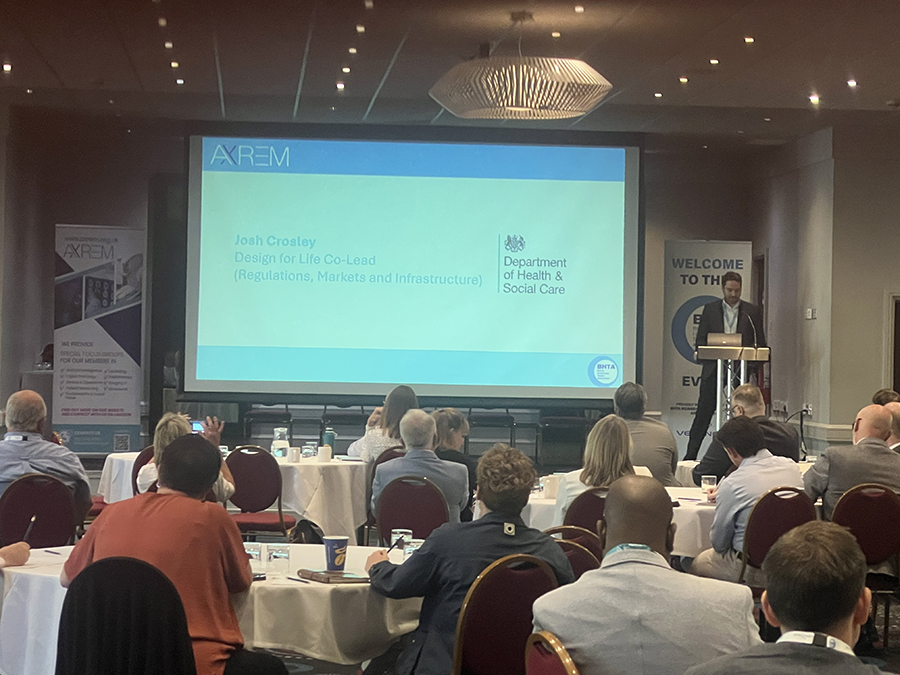
At ‘The Future of MedTech – Innovating for Tomorrow’ conference, Josh Crosley, Co-Lead of the Design for Life programme at the Department of Health and Social Care (DHSC), delivered the third part of a compelling talk titled ‘Building a Sustainable Future through Responsible Procurement’.
The session recapped the Design for Life programme and the opportunities this presents for the medtech sector.
Held on 13 May 2025 at The Mercure in Northampton and jointly hosted by the British Healthcare Trades Association (BHTA) and AXREM, the first two parts of the conference talk were delivered by Chris Taylor from Philips Health Systems and Alexandra Hammond from NHS England.
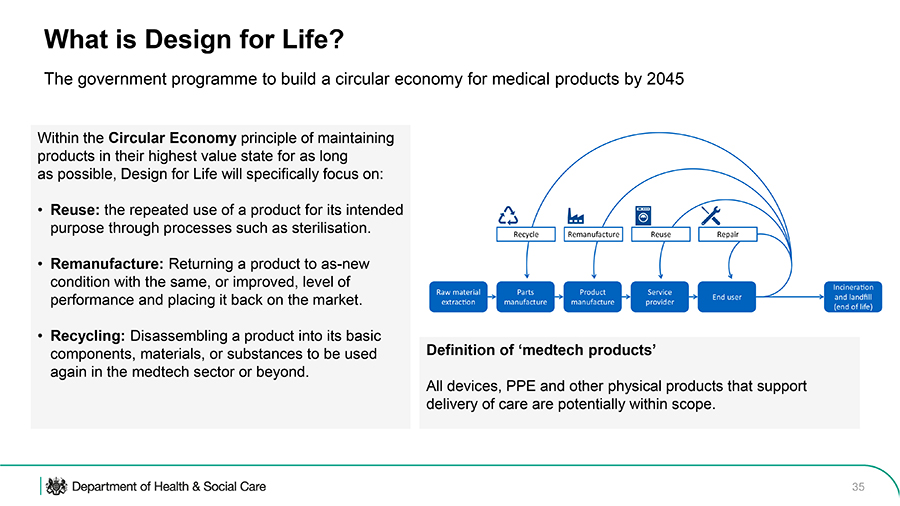
Design for Life is a flagship DHSC programme aiming to create a circular economy for medical products. Rather than the traditional linear model – take, make, dispose – the initiative focuses on reusing, remanufacturing, and recycling medtech devices to keep them in circulation for as long as possible. Importantly, its scope includes a wide range of medtech products used in patient care, from PPE to surgical equipment.
Born out of the supply chain shocks caused by COVID-19 and the war in Ukraine, the programme’s core goal is to increase resilience within the NHS. By reducing dependence on single-use products and extending the lifecycle of products, Design for Life helps ensure continuity of care, even under strain.
Josh highlighted how the programme’s goals are interlinked. Reusable and remanufactured products not only deliver carbon savings of up to 56 percent but also provide significant cost reductions. Many NHS pilots have already demonstrated both financial and quality benefits. For industry, this shift opens up new opportunities in services like remanufacturing, sterile processing, and materials recovery – areas with real potential for economic growth.
The government’s wider commitment to a circular economy underpins the programme, aligning with DEFRA’s national strategy.
One standout example from recent Design for Life pilots was at Northampton General Hospital NHS Trust, which trialled a reusable patient warming device, typically used before and after surgery to prevent hypothermia. Previously, the trust disposed of around 4,000 single-use warming blankets annually at a cost of £28,000.
By switching to a reusable alternative, the trust saved £10,000 each year and reduced emissions by nearly two tonnes of CO₂. Beyond cost and carbon, the reusable product delivered quieter operating theatres and improved patient safety, thanks to a design that eliminated the need for glue to attach the blanket to the patient.
However, adoption was not without its challenges. Shifting to reusable systems required changes in decontamination protocols, staff training, and logistics – highlighting the importance of investment in infrastructure and behaviour change.
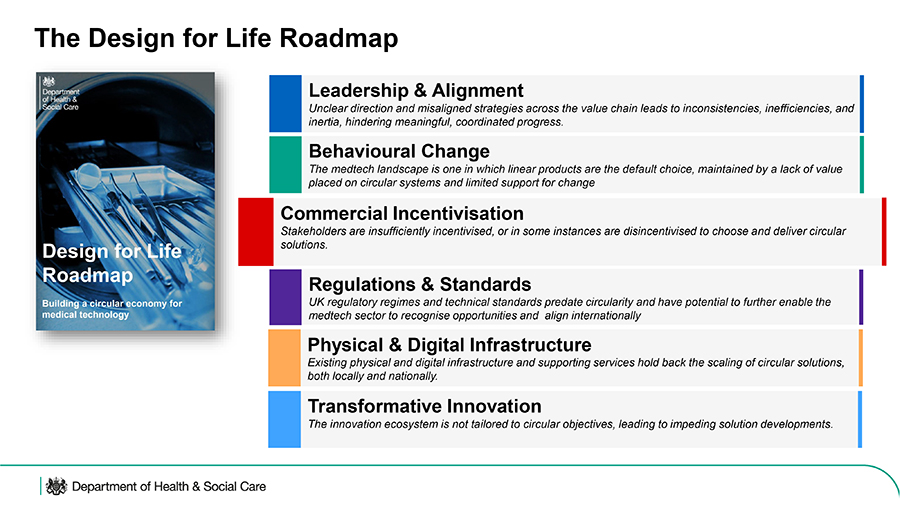
Josh outlined the programme’s roadmap for overcoming such barriers. These include:
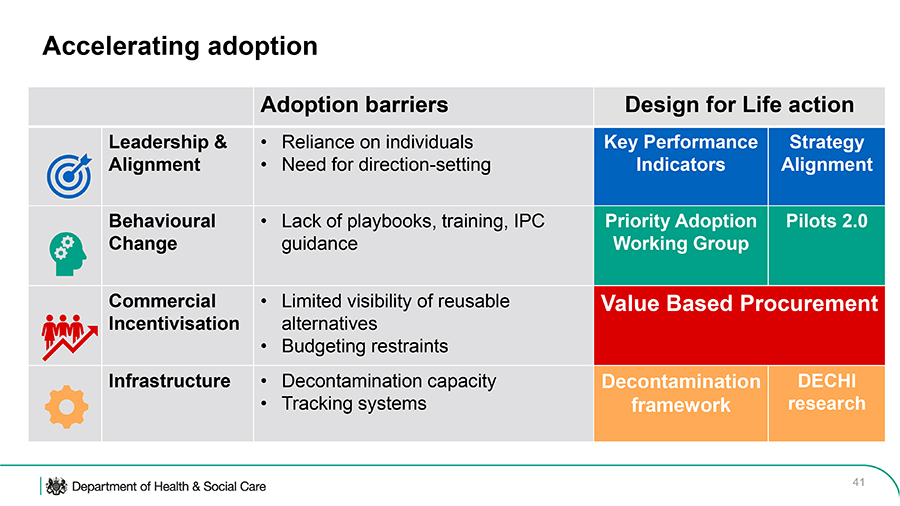
For BHTA members, the Design for Life programme presents a clear signal: the NHS is serious about sustainable procurement, and the system is evolving to support circular solutions. From value-based procurement to new service opportunities, the shift opens commercial pathways for companies ready to innovate.
Josh closed by urging medtech suppliers to engage early, collaborate with NHS partners, and align their products and services with circular principles.