
- Back
- Back
- Back
- Back
- Back
- Back
- Back
- Back
- Back
- Back
The NHS is strengthening its commitment to innovation and efficiency through the introduction of new value-based procurement (VBP) standards for medical technology.
The Department of Health and Social Care (DHSC) has published the ‘Value Based Procurement Standard Guidance for Medical Technology’, designed for use within the NHS’s 13 VBP pilots. Although the guidance has been created to support these pilot projects, it also provides valuable insights and practical applications for the wider medical technology sector.
The guidance is intended for use by both NHS buyers and suppliers to help assess not only the cost of medical devices but also the broader value they deliver to patients, staff, and the healthcare system.
This shift towards value-based decision-making comes alongside the government’s announcement that the NHS will invest in pioneering technology to help reduce waiting lists and improve productivity across services. Together, these initiatives aim to ensure that procurement decisions increasingly reward technologies that demonstrate measurable improvements in outcomes, efficiency, and sustainability.
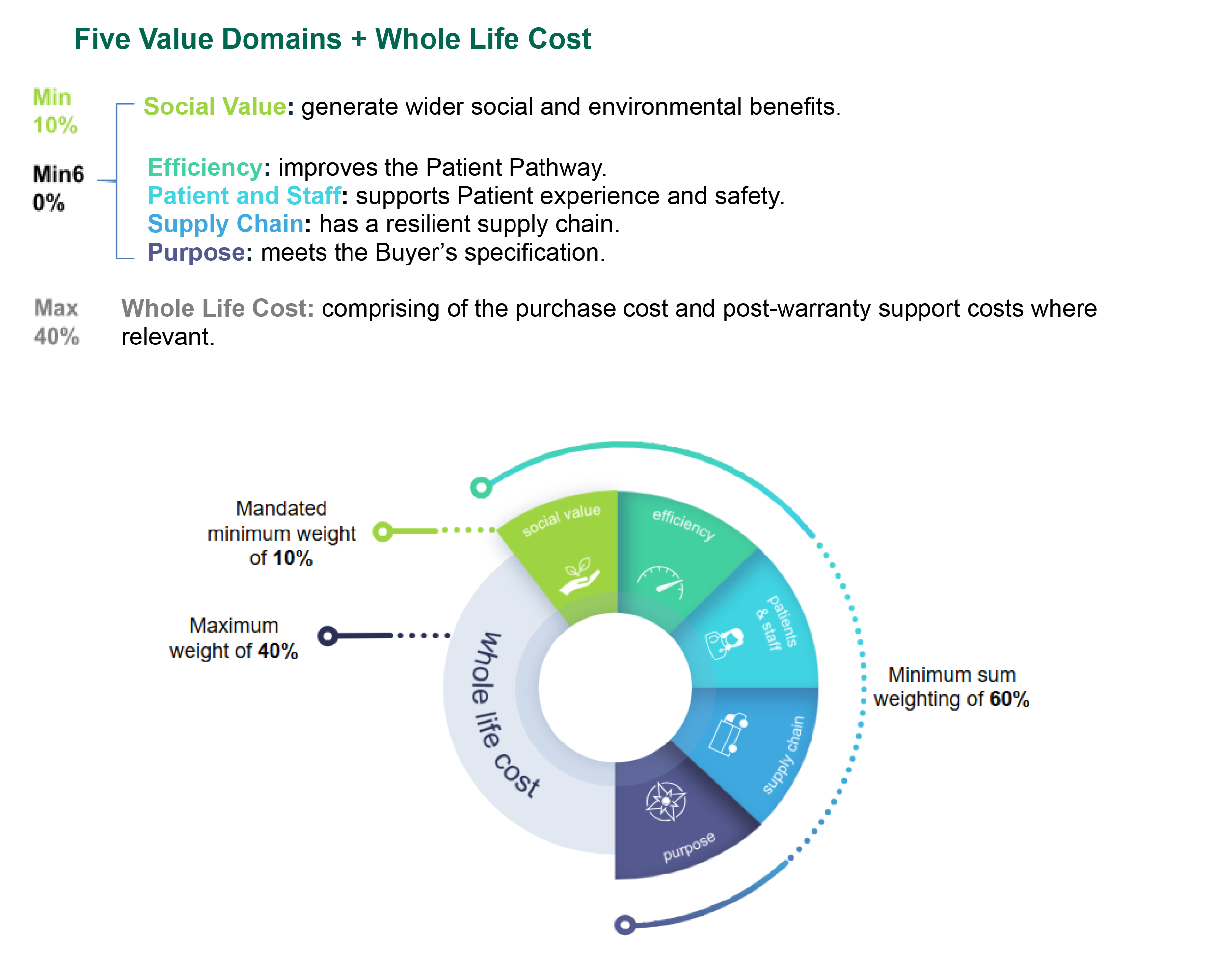
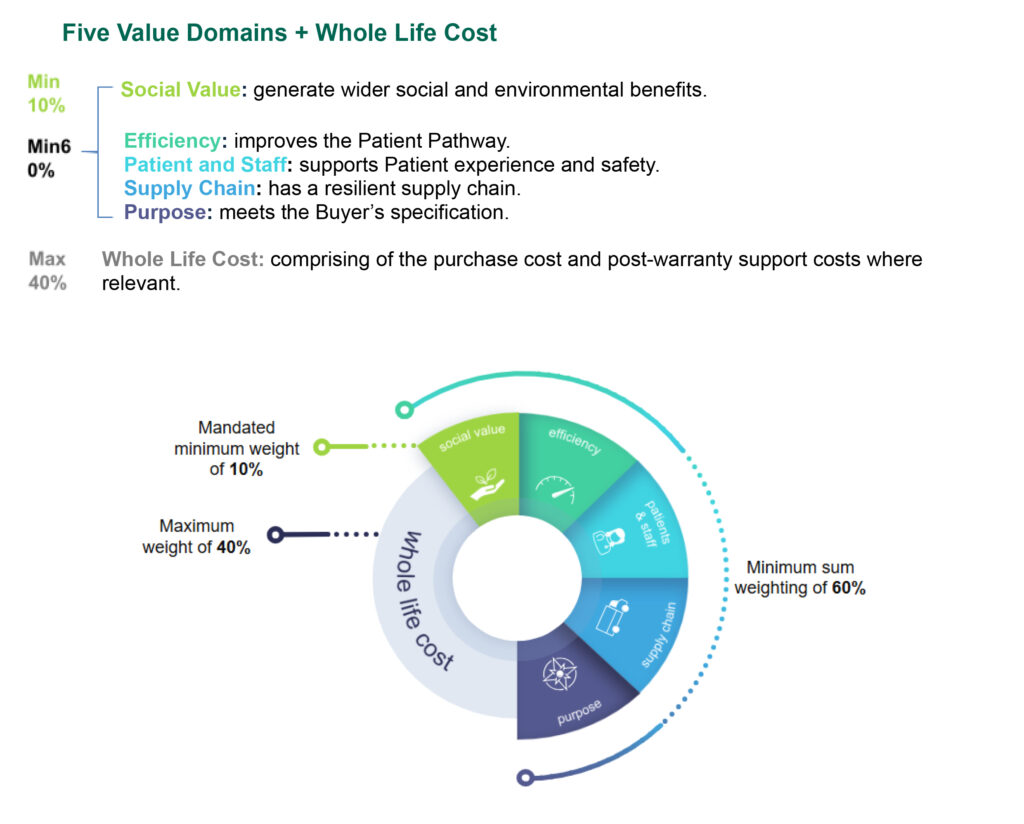
The new DHSC guidance establishes a framework for evaluating medical devices across five domains: social value, efficiency, patient and staff outcomes, supply chain resilience, and purpose. A sixth factor, whole-life cost, complements these domains by ensuring that price is considered within the broader context of lifecycle value.
Under the new framework, NHS buyers are encouraged to assess tenders not solely on upfront cost but on the overall contribution a product or service makes to the health system.
Each domain can be weighted according to the needs of a particular procurement, but social value must account for at least 10 percent of the total weighting, in line with the NHS Social Value Playbook. Overall, at least 60 percent of procurement scoring must relate to the value domains, while whole-life cost is capped at 40 percent.
This marks a step away from purely price-driven procurement and towards a model that prioritises long-term outcomes, sustainability, and patient benefit.
Each of the five value domains provides a structured set of questions and evaluation criteria for buyers and suppliers. The social value domain encourages suppliers to demonstrate how they will reduce carbon emissions, manage modern slavery risks, or improve sustainability in packaging and disposal. The efficiency domain considers how a product can simplify patient pathways, increase hospital or community productivity, and support accurate measurement of outcomes. The patient and staff domain emphasises safety, patient experience, and health equity, while supply chain and purpose focus on resilience, interoperability, and ease of use.
Suppliers are expected to provide measurable, evidence-based responses that show how their technologies can deliver tangible improvements. This includes providing baseline data, real-world evidence, and models that quantify benefits such as reduced complications, improved patient satisfaction, or optimised workforce time.
The guidance is part of a wider shift within the NHS towards integrating innovation, sustainability, and productivity.
Andrew New, CEO of NHS Supply Chain, said: “Innovative technology has a vital role to play in delivering faster, simpler and more effective care for patients. Through this new approach, we can ensure that procurement not only secures the best value for money but also supports the NHS in achieving its long-term goals around efficiency, sustainability and patient outcomes.”
BHTA member companies supplying medical technology to the NHS will need to engage more deeply with buyers to demonstrate measurable value through data, evidence, and partnership. This includes clearly articulating how their products support clinical efficiency, improve patient experience, and align with NHS sustainability objectives.
The framework also highlights the importance of collaboration between suppliers, clinical teams, and procurement professionals. Bidders are encouraged to provide evidence that supports their claims, including quantitative data, modelling, and independent validation where possible.
The guidance advises buyers to ensure proportionality in their tender requirements to support the participation of small and medium-sized enterprises (SMEs) within the medtech sector.
Suppliers may wish to focus on areas such as:
By preparing evidence-rich submissions aligned to the five value domains, suppliers can better position themselves to succeed in NHS tenders under this new approach.
The VBP guidance underscores a wider movement within the healthcare system towards smarter, more sustainable procurement. As the NHS aims to make better use of technology to enhance care delivery, these frameworks are helping to ensure that procurement decisions reflect genuine long-term value.
Andrew added: “By focusing on value rather than volume, we are creating the conditions for innovation to thrive — enabling suppliers to bring forward solutions that improve outcomes for patients and deliver efficiencies for the NHS.”
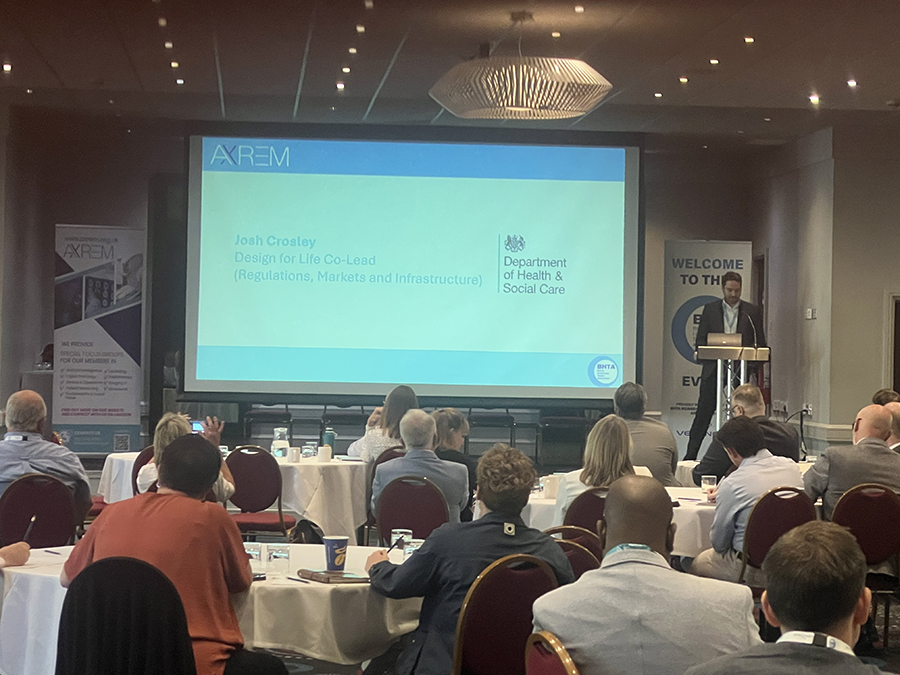
At ‘The Future of MedTech – Innovating for Tomorrow’ conference, Josh Crosley, Co-Lead of the Design for Life programme at the Department of Health and Social Care (DHSC), delivered the third part of a compelling talk titled ‘Building a Sustainable Future through Responsible Procurement’.
The session recapped the Design for Life programme and the opportunities this presents for the medtech sector.
Held on 13 May 2025 at The Mercure in Northampton and jointly hosted by the British Healthcare Trades Association (BHTA) and AXREM, the first two parts of the conference talk were delivered by Chris Taylor from Philips Health Systems and Alexandra Hammond from NHS England.
Design for Life is a flagship DHSC programme aiming to create a circular economy for medical products. Rather than the traditional linear model – take, make, dispose – the initiative focuses on reusing, remanufacturing, and recycling medtech devices to keep them in circulation for as long as possible. Importantly, its scope includes a wide range of medtech products used in patient care, from PPE to surgical equipment.
Born out of the supply chain shocks caused by COVID-19 and the war in Ukraine, the programme’s core goal is to increase resilience within the NHS. By reducing dependence on single-use products and extending the lifecycle of products, Design for Life helps ensure continuity of care, even under strain.
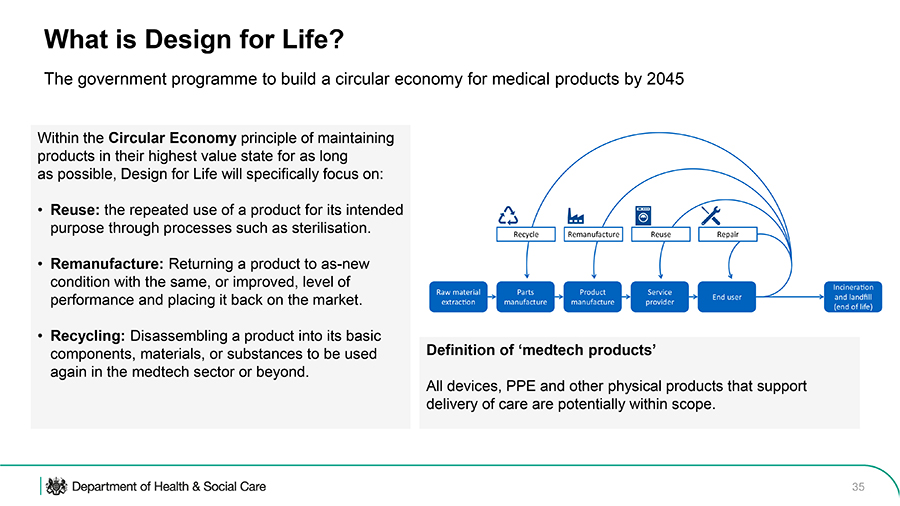
Josh highlighted how the programme’s goals are interlinked. Reusable and remanufactured products not only deliver carbon savings of up to 56 percent but also provide significant cost reductions. Many NHS pilots have already demonstrated both financial and quality benefits. For industry, this shift opens up new opportunities in services like remanufacturing, sterile processing, and materials recovery – areas with real potential for economic growth.
The government’s wider commitment to a circular economy underpins the programme, aligning with DEFRA’s national strategy.
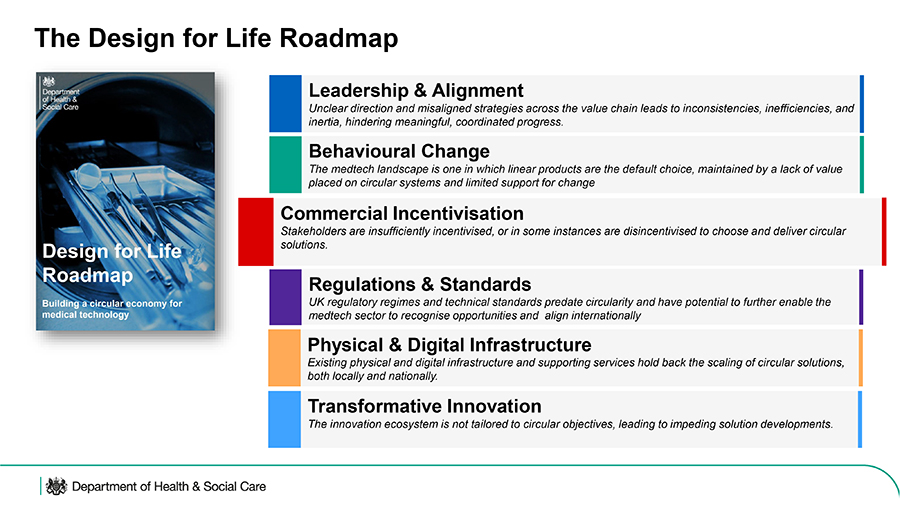
One standout example from recent Design for Life pilots was at Northampton General Hospital NHS Trust, which trialled a reusable patient warming device, typically used before and after surgery to prevent hypothermia. Previously, the trust disposed of around 4,000 single-use warming blankets annually at a cost of £28,000.
By switching to a reusable alternative, the trust saved £10,000 each year and reduced emissions by nearly two tonnes of CO₂. Beyond cost and carbon, the reusable product delivered quieter operating theatres and improved patient safety, thanks to a design that eliminated the need for glue to attach the blanket to the patient.
However, adoption was not without its challenges. Shifting to reusable systems required changes in decontamination protocols, staff training, and logistics – highlighting the importance of investment in infrastructure and behaviour change.
Josh outlined the programme’s roadmap for overcoming such barriers. These include:
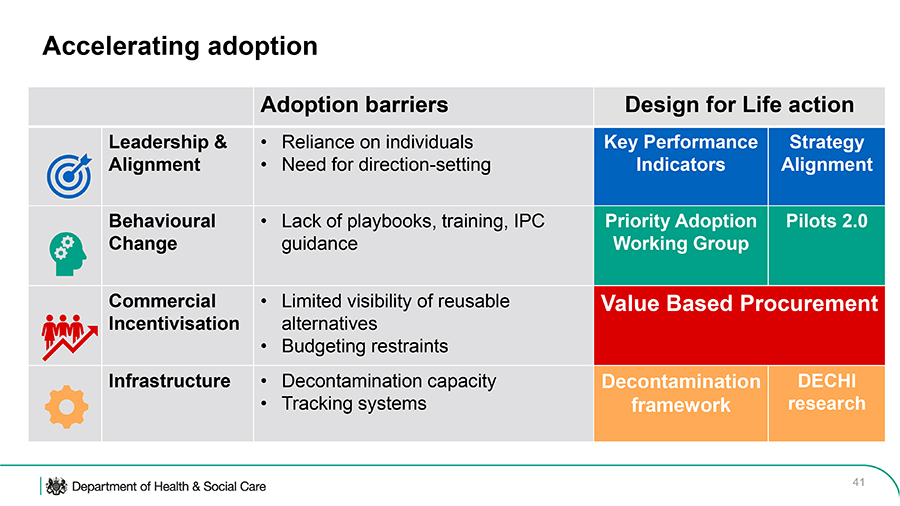
For BHTA members, the Design for Life programme presents a clear signal: the NHS is serious about sustainable procurement, and the system is evolving to support circular solutions. From value-based procurement to new service opportunities, the shift opens commercial pathways for companies ready to innovate.
Josh closed by urging medtech suppliers to engage early, collaborate with NHS partners, and align their products and services with circular principles.

At the recent British Healthcare Trades Association (BHTA) Conference 2024, Fiona Hilton, Director of Commercial Best Practice & Engagement for NHS England, discussed The Procurement Act 2023 and the Strategic Framework for NHS Commercial.
The BHTA Conference 2024 focused on the UK healthtech landscape over the next five years. It was a chance for BHTA members to hear from senior government and NHS speakers about how the changes made today will impact the future of the health service.
Fiona highlighted the NHS Commercial portfolio and how it all links together. This revolves around four central initiatives: the NHS Central Commercial Function (CCF) service offers, the Commercial Efficiencies Programme, the Procurement Act, and the Strategic Framework for NHS Commercial. See the slide below for further details.
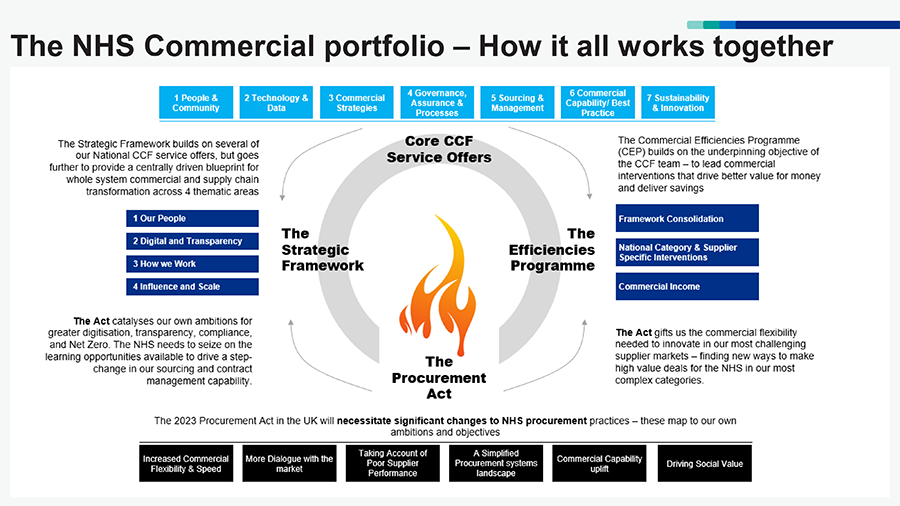
“We’re trying to link the NHS much more into how the whole of central commercial government works, so that we can collaborate and engage with some of the standard practices that are already in place,” Fiona said.
One key point from Fiona’s presentation is that healthcare procurement is set to transform in 2024 with the introduction of two new procurement regimes: the Procurement Act 2023 and the Provider Selection Regime (PSR).
Fiona emphasised that the NHS believes that the Procurement Act 2023 is key to transforming procurement in the medtech sector. The Act will go live on 28 October 2024.
“We believe that the Procurement Act is a fundamental catalyst to enable change,” added Fiona. “It’s really key for us to be able to establish what we want to do on innovation, working with SMEs, and enabling greater transparency with our suppliers.”
The Procurement Act 2023, she said, will introduce a new competitive and flexible procedure that will enable the NHS to work innovatively and faster with suppliers. It simplifies the regulations that govern public procurement and promises increased commercial flexibility.
Additionally, within the Act, the Competitive Flexible Procedure will allow contracting authorities to design processes that best suit their needs, rather than follow suboptimal standardised procedures.
Importantly, Fiona stressed that the Act will give the NHS an enhanced to take into account poor performance suppliers and the potential debarment of those that do not improve, which will help the NHS improve outcomes.
Additionally, Fiona encouraged medtech suppliers to become familiar with the PSR, which launched in January 2024. It represents a new set of rules governing healthcare services in England. The PSR exempts healthcare contracts from the formal public procurement regime. Fiona added that the regime enables a more flexible, proportionate process when awarding healthcare contracts.
Another important topic from the presentation was around the Strategic Framework for NHS Commercial, which aims to be globally renowned, supporting the delivery of the world-class Commercial Function in healthcare, in patient care, and in outcomes. See the slide below for more information.
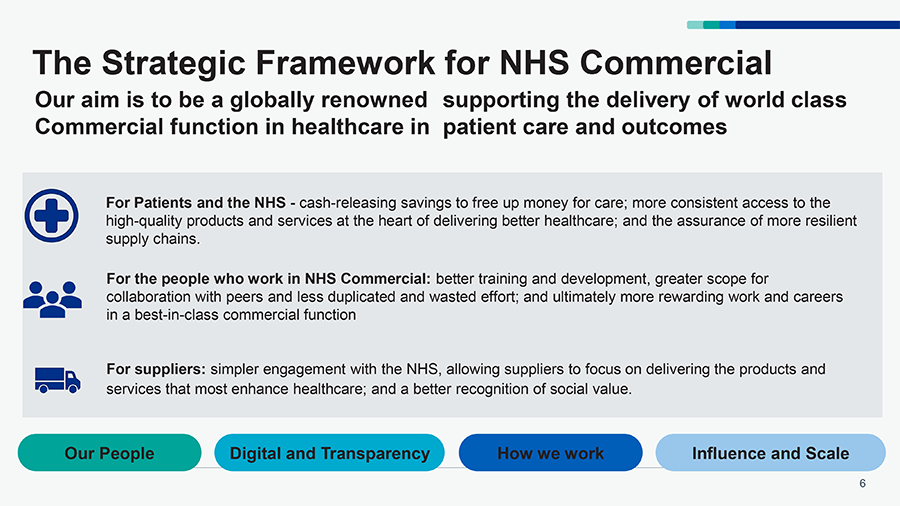
Fiona explained: “The Strategic Framework was put together originally in order to be able to support the whole of commercial healthcare for outcomes, not just about value for money upfront. It was about benefitting the whole of the life cycle, and the outcomes across all of commercial.”